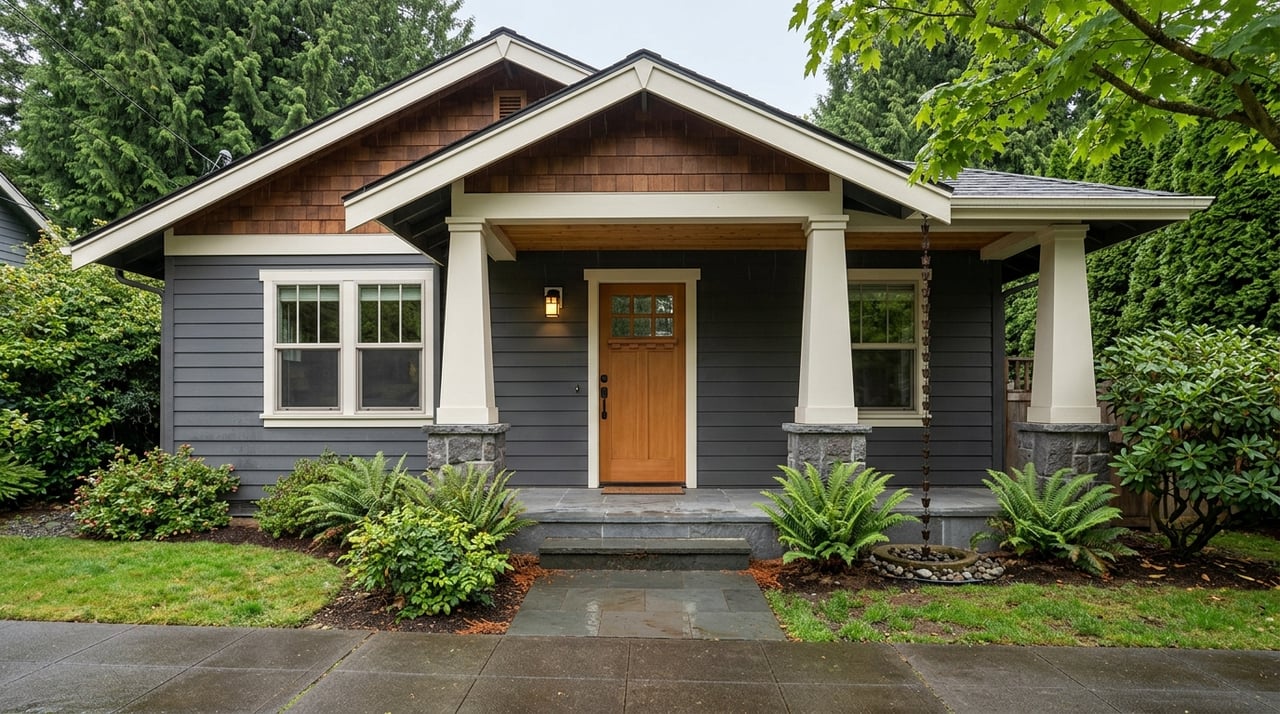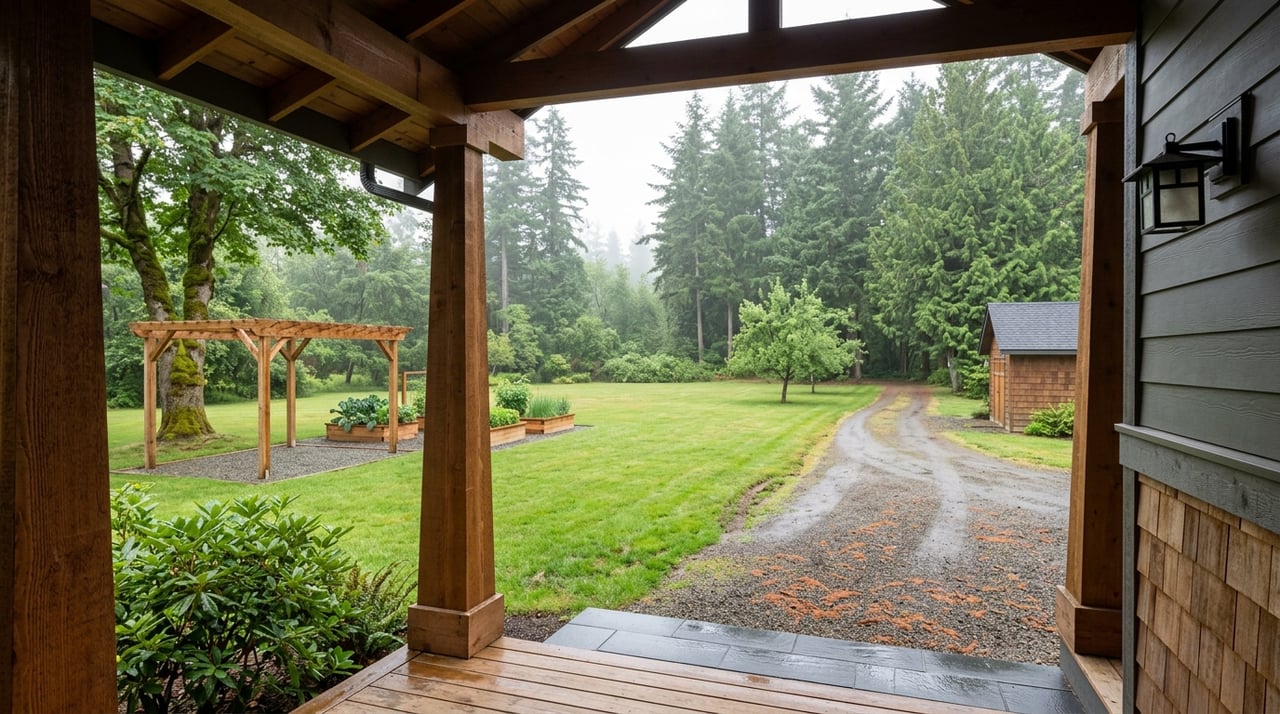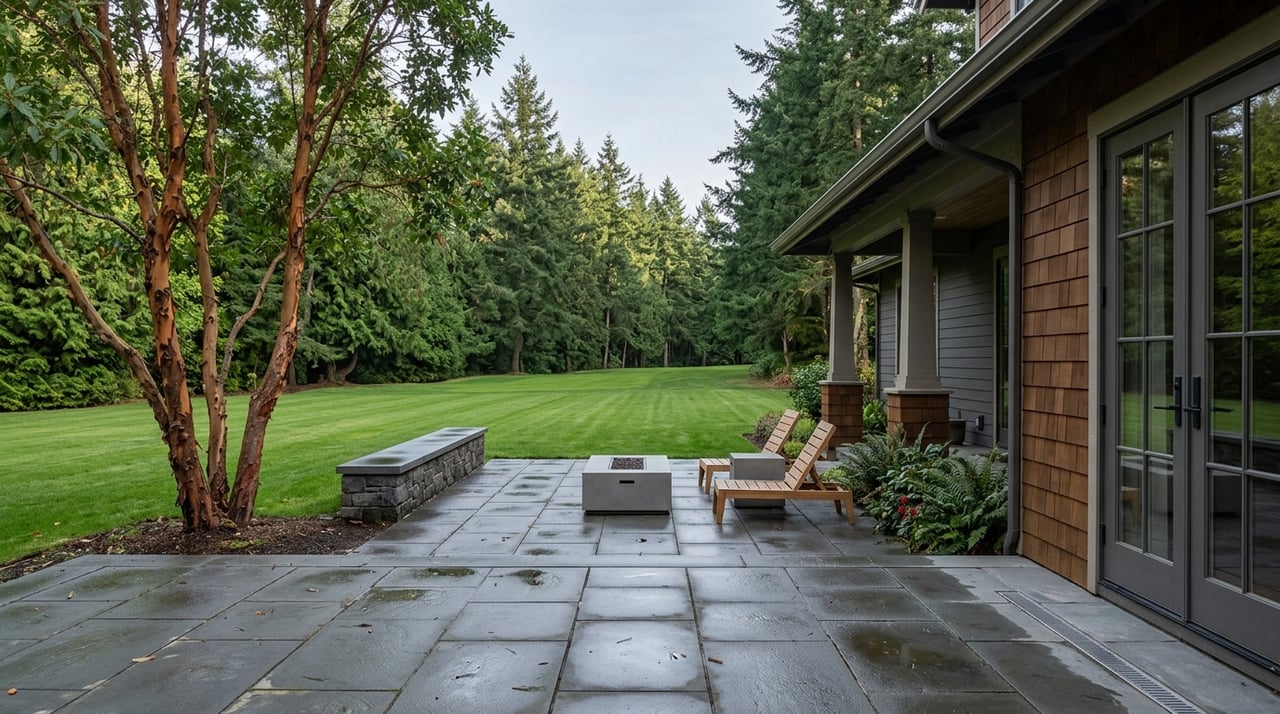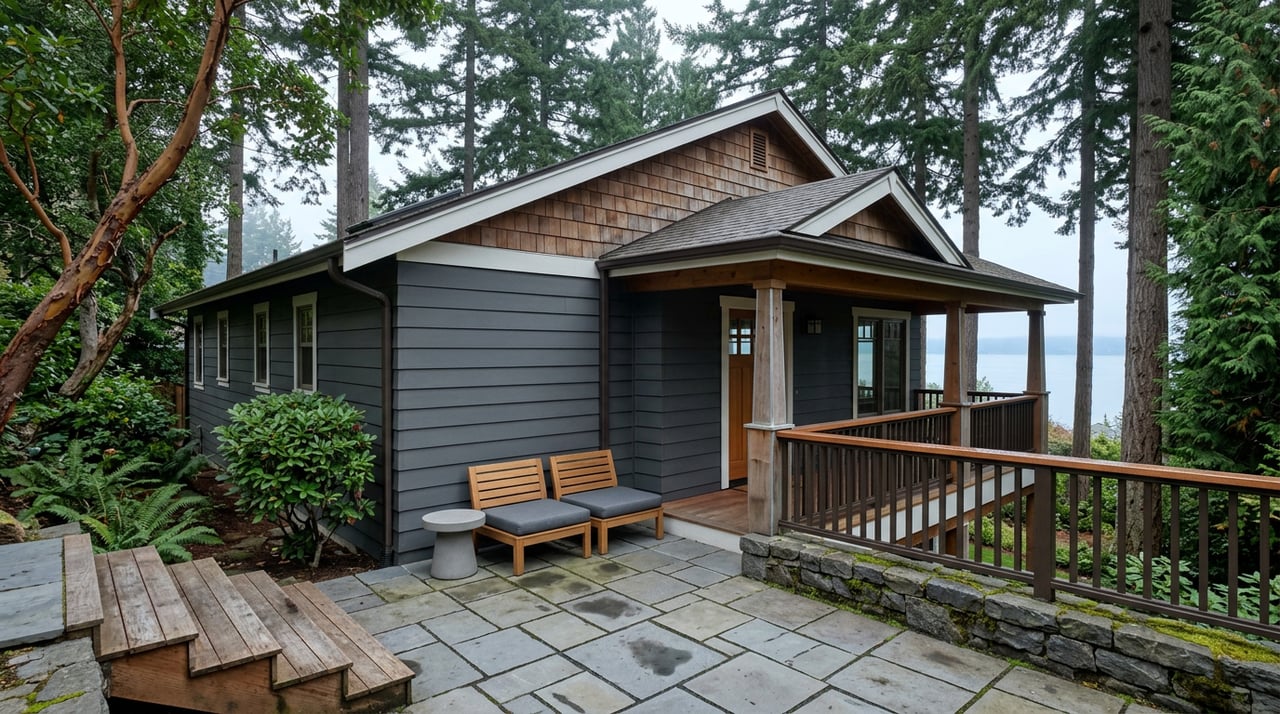
If you are dreaming about more space near Battle Point Park, you are probably picturing quiet mornings, trail access, and room to spread out. That appeal is real, but acreage on Bainbridge Island often comes with a different set of questions than an in-town home on a smaller lot. If you understand how land, utilities, and permits work before you buy, you can move forward with much more confidence. Let’s dive in.
Why Battle Point Park draws acreage buyers
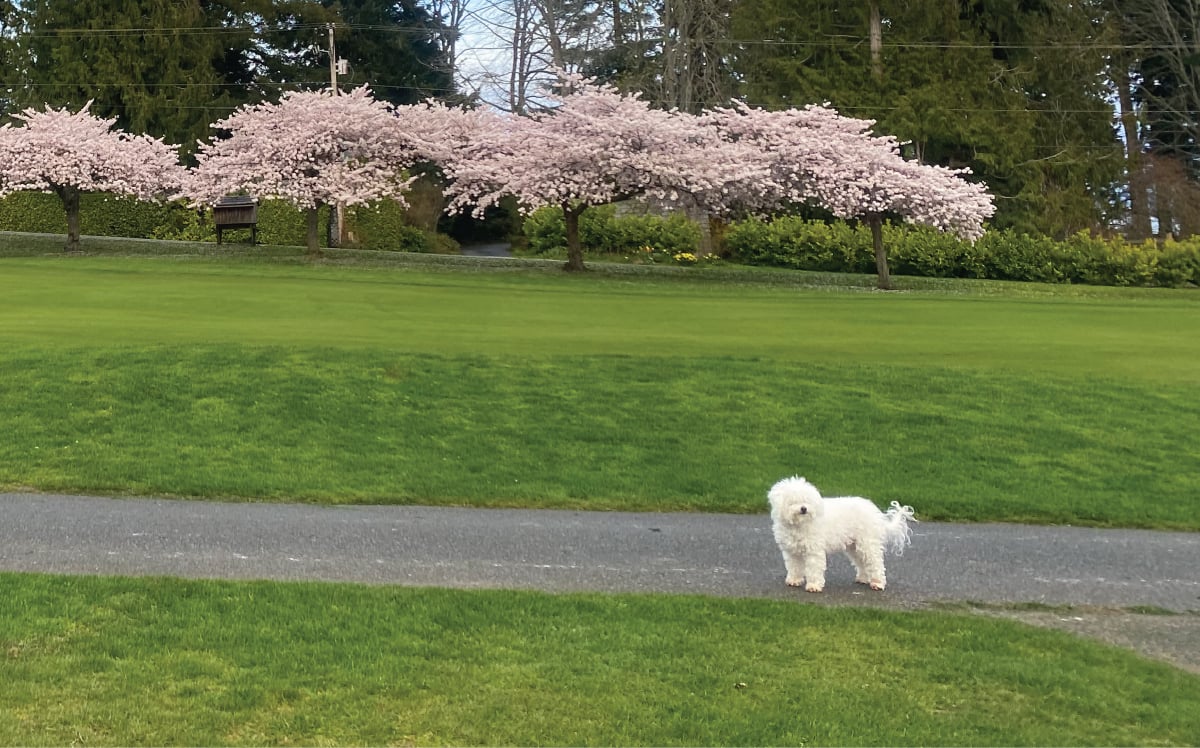
Battle Point Park gives this area a strong open-space feel that is hard to replicate elsewhere on the island. The park spans 90 acres and includes open grass areas, sports fields, picnic space, garden plots, a pump track, an observatory, equestrian amenities, and multiple trail connections.
For many buyers, that means daily life can feel more outdoors-oriented. The Battle Point Trail System includes a 2-mile interior loop and a 1.5-mile equestrian perimeter trail, while the Forest-to-Sky Trail connects the park to Grand Forest West and the Cross Island Trail.
That said, living near a major park is not exactly the same as living on a quiet interior lane. Trailheads, recreational use, and parking activity can create a little more movement nearby, especially compared with a more tucked-away in-town street.
How acreage differs from in-town housing
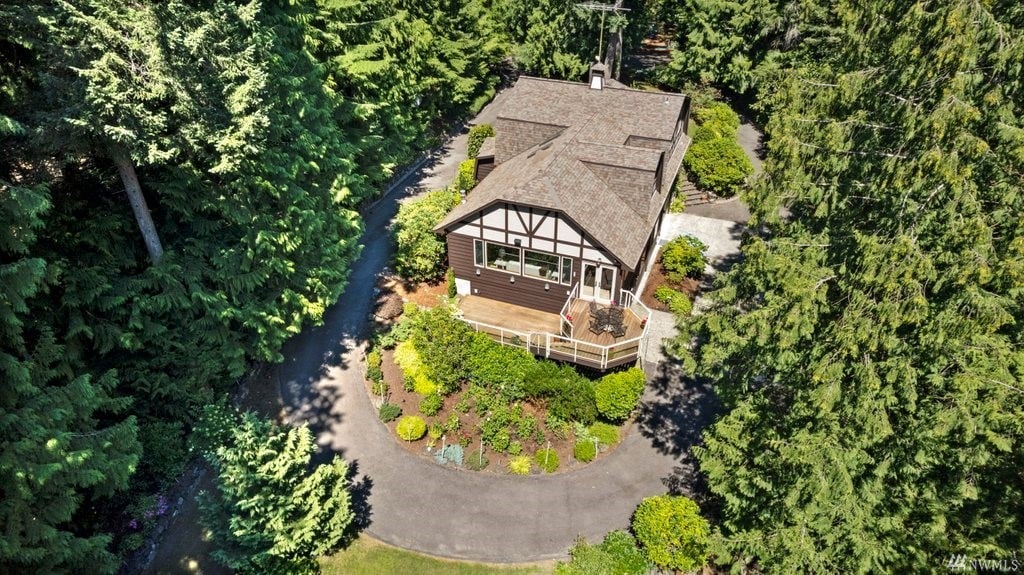
Acreage properties near Battle Point Park often look simple at first glance: more land, more privacy, more flexibility. In practice, the land itself can be as important as the house. What is legally established on the parcel, what has been permitted over time, and what can be added later all matter.
Bainbridge Island’s zoning map offers a useful starting point. Low-density residential districts include R-0.4, labeled as 1 unit per 2.5 acres, and R-1, labeled as 1 unit per acre. That does not tell you everything about a specific property, but it does help explain why larger parcels function differently from standard residential lots.
On acreage, buyers should think beyond square footage and finishes. Setbacks, zoning, plat history, and development standards can affect how you use the property now and in the future.
What to verify on the land itself
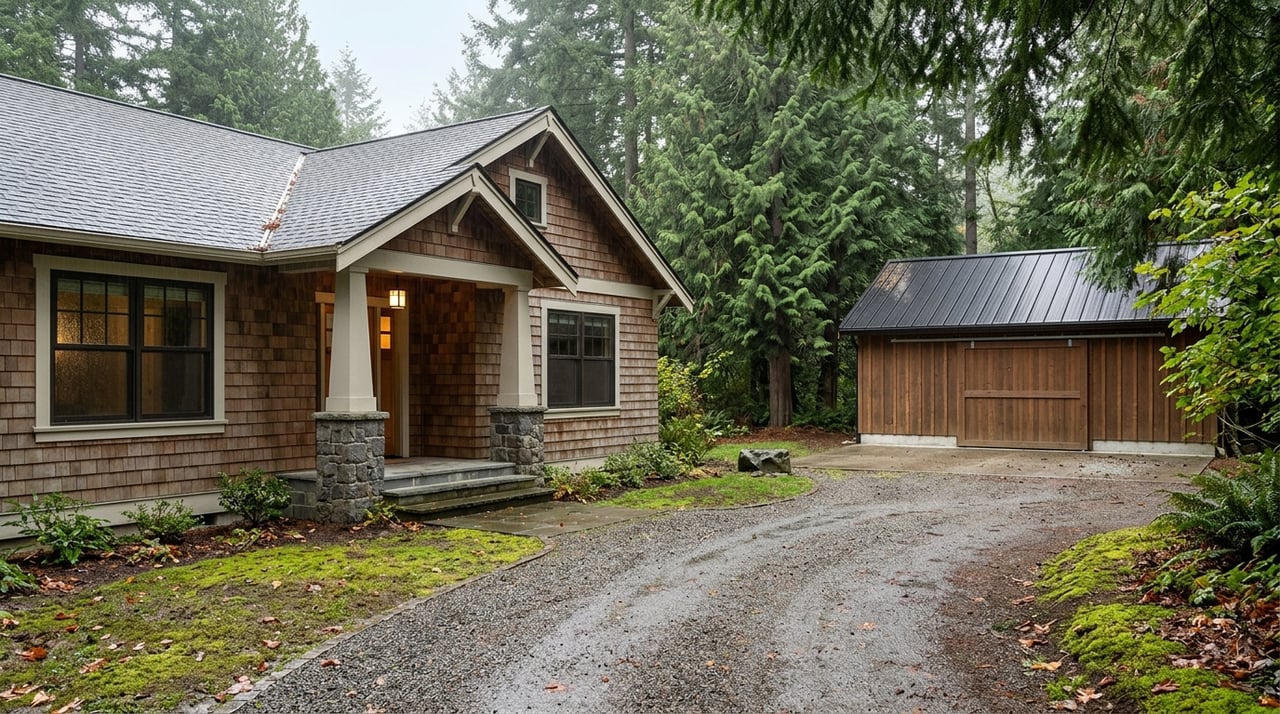
When you buy acreage, one of the most important questions is not just what you see, but what is documented. A barn, shop, shed, or detached structure may be useful, but you will want to confirm permit history and whether any later improvements were approved.
This matters even more if utilities were added. Kitsap Public Health specifically warns against adding plumbing to outbuildings without project review and approval, so a detached building with a sink, bathroom, or other plumbing feature deserves extra scrutiny.
Boundary clarity also matters more on larger lots. The city recommends GIS as a screening tool, but notes that it is not a survey, so a licensed surveyor is the right professional if you need exact boundary confirmation.
Water service can vary by parcel
Utilities on Bainbridge acreage can be more varied than many buyers expect. The city states that there are more than 100 independent water systems on Bainbridge Island, and a home may be served by the City, a community well, or a larger water system.
That means two nearby properties can have very different water arrangements. It is important to understand who serves the parcel, what system applies, and what records are available before you commit.
If a home has a private well, the owner is responsible for testing the water. The Washington Department of Health recommends annual testing for coliform bacteria and nitrate, along with arsenic testing at least twice during ownership.
If the property is served by a private or Group B water system in Kitsap, Kitsap Public Health requires a Water Status Report before sale. For buyers, that report is a key piece of due diligence.
Septic should be a major part of your review
Many acreage buyers focus first on the house, then on the land, and only later on the septic system. In this area, septic deserves your attention early.
Kitsap Public Health advises getting a property conveyance inspection before final sale. That is especially important given that in 2025, 27% of septic conveyance inspections found significant deficiencies.
You will also want to confirm the approved bedroom count and system capacity. A house may function one way in daily use, but septic approval controls what the property is designed to support.
Drainfield location and condition matter too. Kitsap Public Health advises owners to keep drainfields clear, maintain access to alternative-system components, and avoid unapproved plumbing changes, especially in outbuildings.
Larger lots mean more site-maintenance questions
More land can be a lifestyle upgrade, but it also creates more responsibility. Landscape watering, irrigation, drainage, and runoff become more important as parcel size grows.
That is especially relevant on Bainbridge because the city notes that all water-supply needs depend on groundwater. The city’s stormwater utility also addresses flooding, erosion, pollution, habitat degradation, and low stream flows, which shows how closely site conditions and water management are connected.
In practical terms, buyers should look at how the property handles wet weather, where runoff appears to move, and whether landscaping or grading may affect long-term maintenance. On acreage, those details can shape both cost and usability.
Critical areas can affect future plans
If you are buying acreage because you hope to expand, add structures, or make long-term improvements, this is one of the most important parts of your research. Bainbridge Island designates the entire island as a critical aquifer recharge area.
The city’s critical areas rules also address wetlands, fish and wildlife habitat conservation areas, and geologically hazardous areas. If a parcel is near the shoreline, shoreline standards apply within 200 feet of the shoreline.
These rules do not automatically make a property unworkable. They do mean that your future plans should be tested against actual records, site conditions, and city standards rather than assumptions.
Documents to request before writing an offer
On acreage near Battle Point Park, a strong offer is not just about price. It is also about understanding what you are buying.
Before writing an offer, ask for:
- Current zoning information
- Plat or subdivision history
- Survey or boundary information
- Septic record drawing
- Water Status Report, when required
- Permits for additions, barns, shops, or other outbuildings
If records are missing, that is not always a deal-breaker, but it should change the conversation. Missing septic records, for example, may need to be recreated for conveyance review.
The right professionals can save you stress
Acreage purchases usually benefit from a broader due-diligence team than a standard in-town purchase. The most useful professionals are often a licensed surveyor, home inspector, septic specialist or designer, and a well or water testing lab.
Each one helps answer a different question. Together, they can help you understand what is spacious and appealing versus what is actually buildable, permitted, and manageable over time.
This is where local guidance matters. On Bainbridge, the details can vary significantly from one parcel to the next, even within the same general area.
What to expect as a buyer near Battle Point Park
In simple terms, buying acreage near Battle Point Park often means trading a more straightforward in-town property search for a more layered one. You may gain privacy, trail access, and a stronger connection to open space, but you will likely need to spend more time reviewing utilities, land constraints, permits, and maintenance needs.
That extra work can be worth it. When the property lines up with your goals and the records support how the land is being used, acreage near Battle Point Park can offer a lifestyle that feels both spacious and grounded in one of Bainbridge’s best-loved outdoor settings.
If you are considering a purchase in this area, a calm, organized review process is your best advantage. The goal is not just to fall in love with the setting, but to understand the property well enough to feel confident about what comes next.
If you want a local perspective on acreage near Battle Point Park, McLaughlin & Co. can help you evaluate the details, ask the right questions, and move forward with clarity. Make time for coffee and schedule a consultation.
FAQs
What makes acreage near Battle Point Park different from other Bainbridge homes?
- Acreage near Battle Point Park often involves more due diligence around zoning, boundaries, septic, water service, outbuildings, and future use than a smaller in-town residential lot.
What park features should buyers know about near Battle Point Park?
- Battle Point Park is a 90-acre regional park with sports fields, open space, garden plots, equestrian amenities, an observatory, and trail connections including the 2-mile interior loop and the 0.9-mile Forest-to-Sky Trail.
What water questions should buyers ask about Bainbridge acreage?
- You should ask whether the property is served by City water, a community well, a larger water system, or a private well, and request any required Water Status Report or water-testing information.
What septic records should buyers request for acreage in Kitsap County?
- Buyers should request the septic record drawing, confirm the approved bedroom count and system capacity, and review the results of any property conveyance inspection.
What outbuilding issues matter when buying acreage near Battle Point Park?
- Buyers should verify whether barns, shops, and other outbuildings were properly permitted and whether any plumbing or utility additions were approved through project review.
What professionals help most when buying Bainbridge acreage?
- A licensed surveyor, home inspector, septic specialist or designer, and well or water testing lab are often the most useful professionals for evaluating acreage before closing.