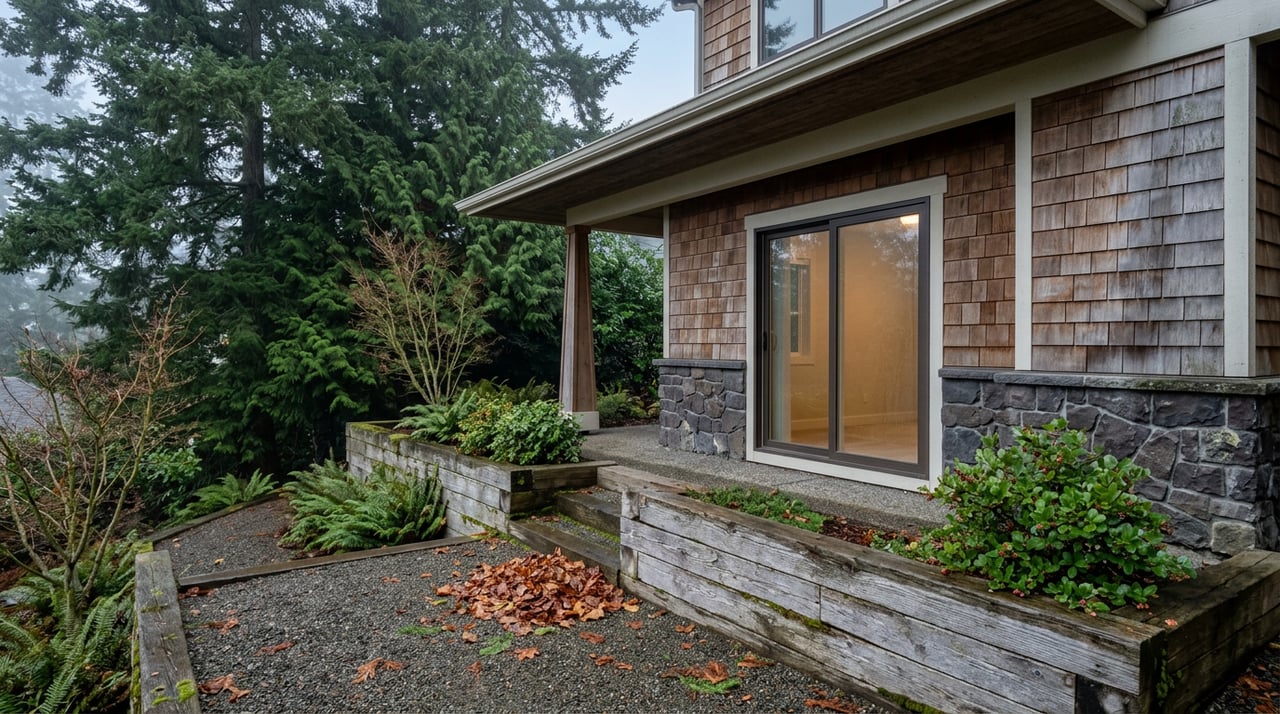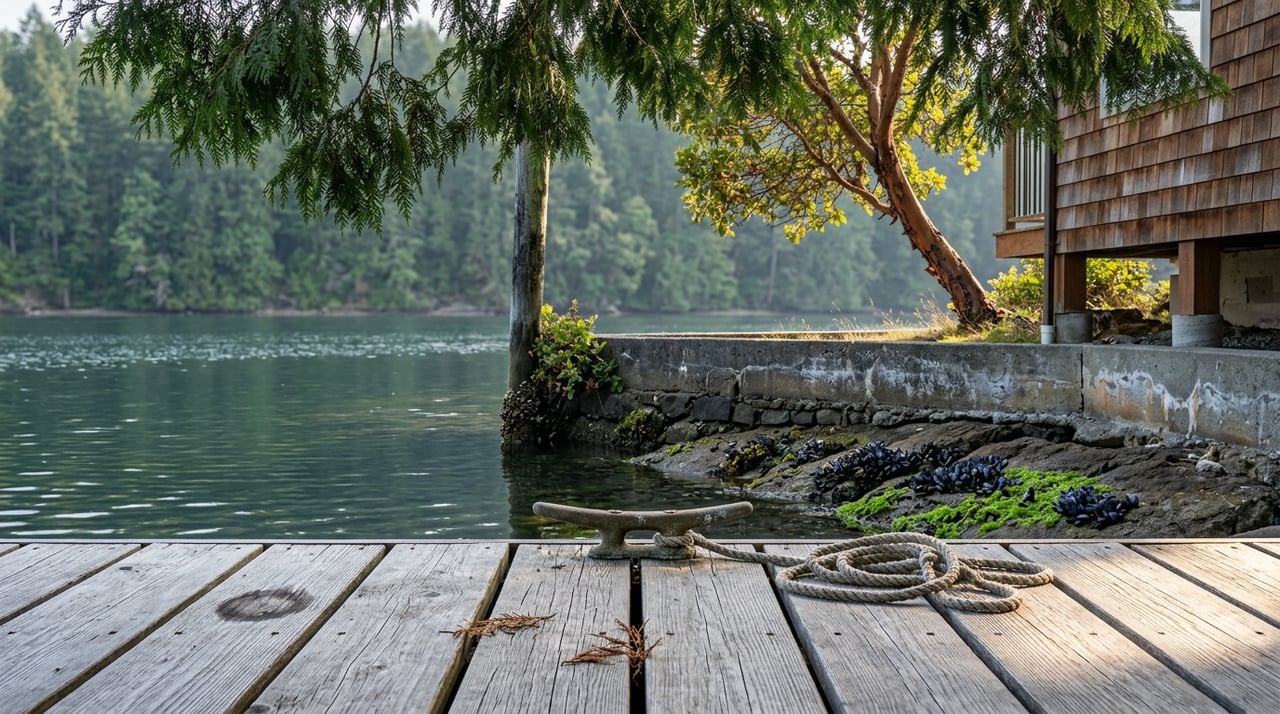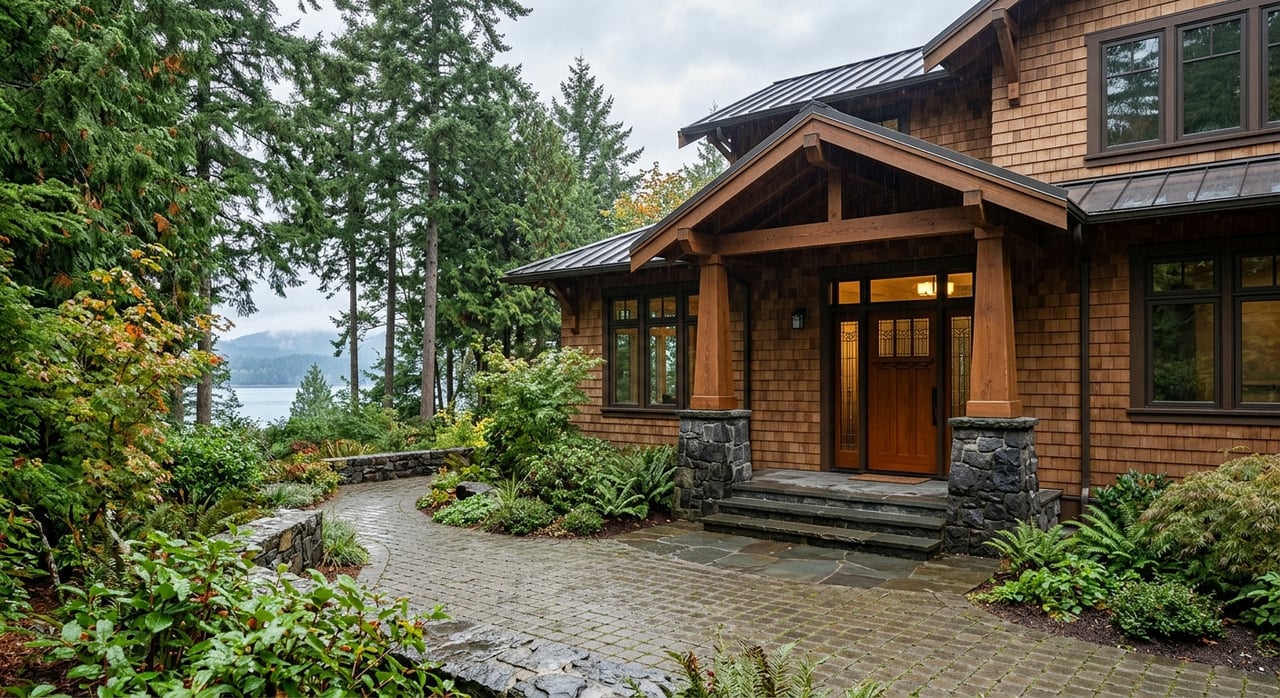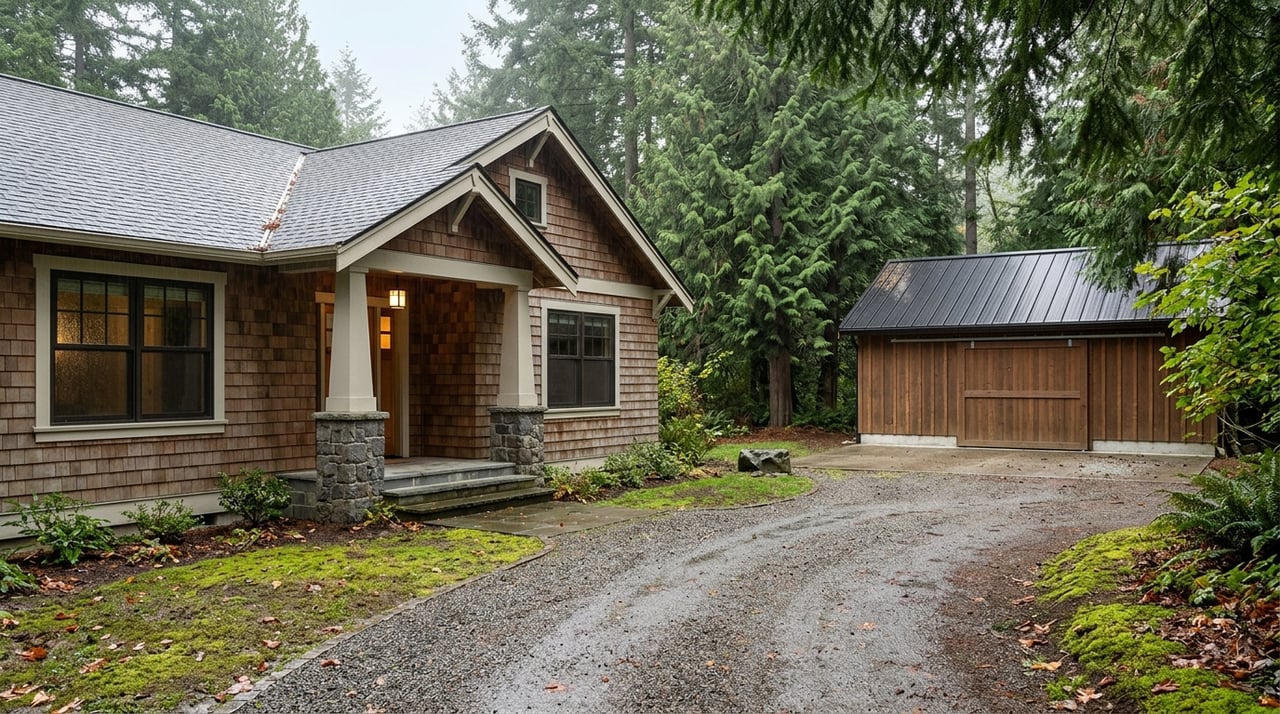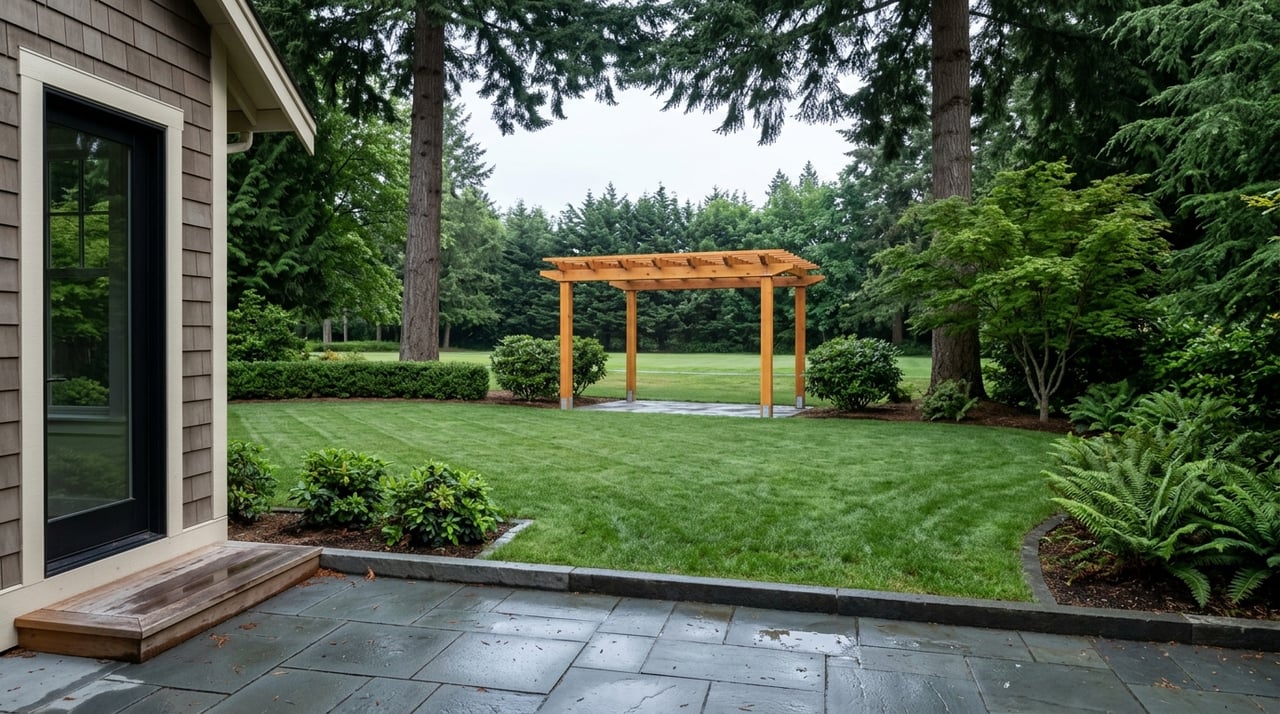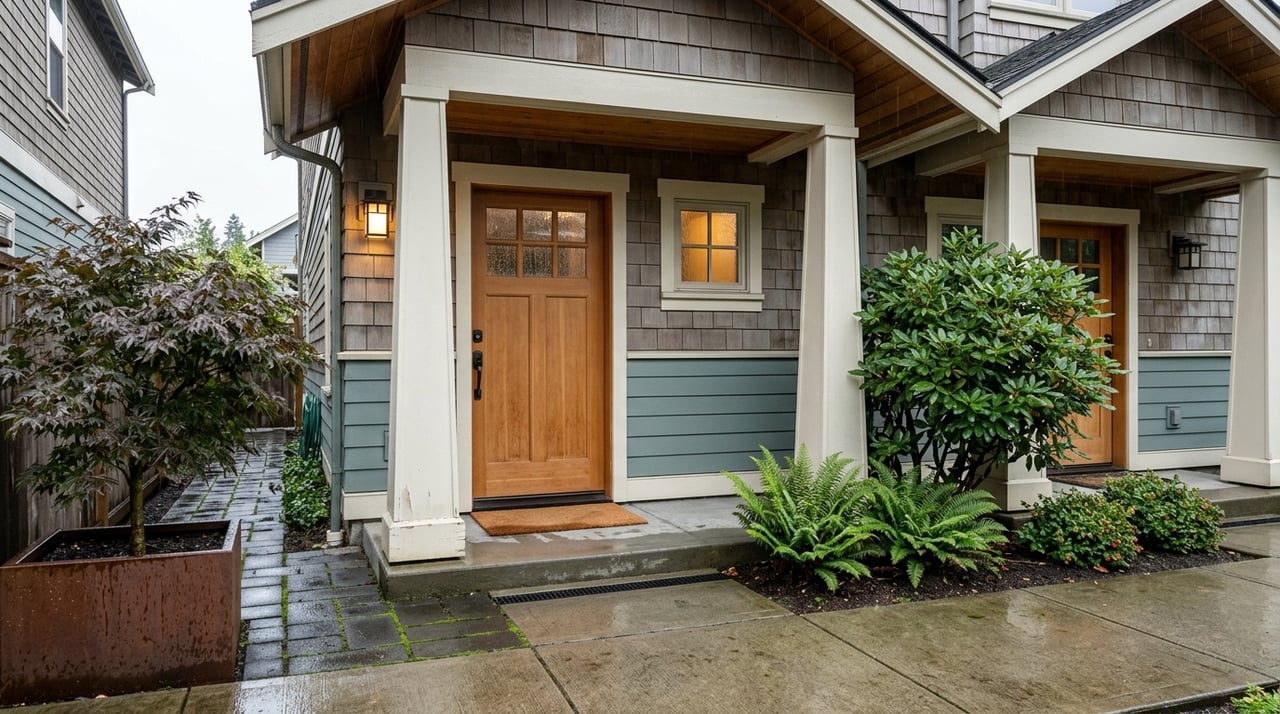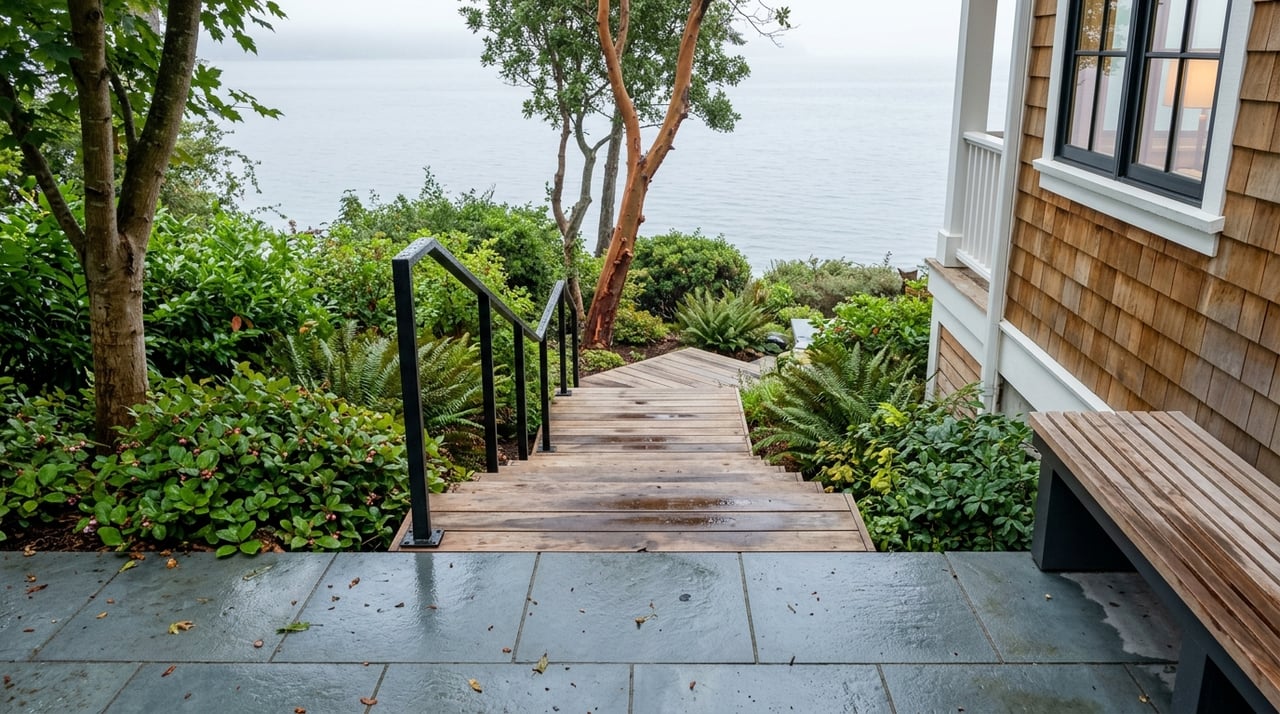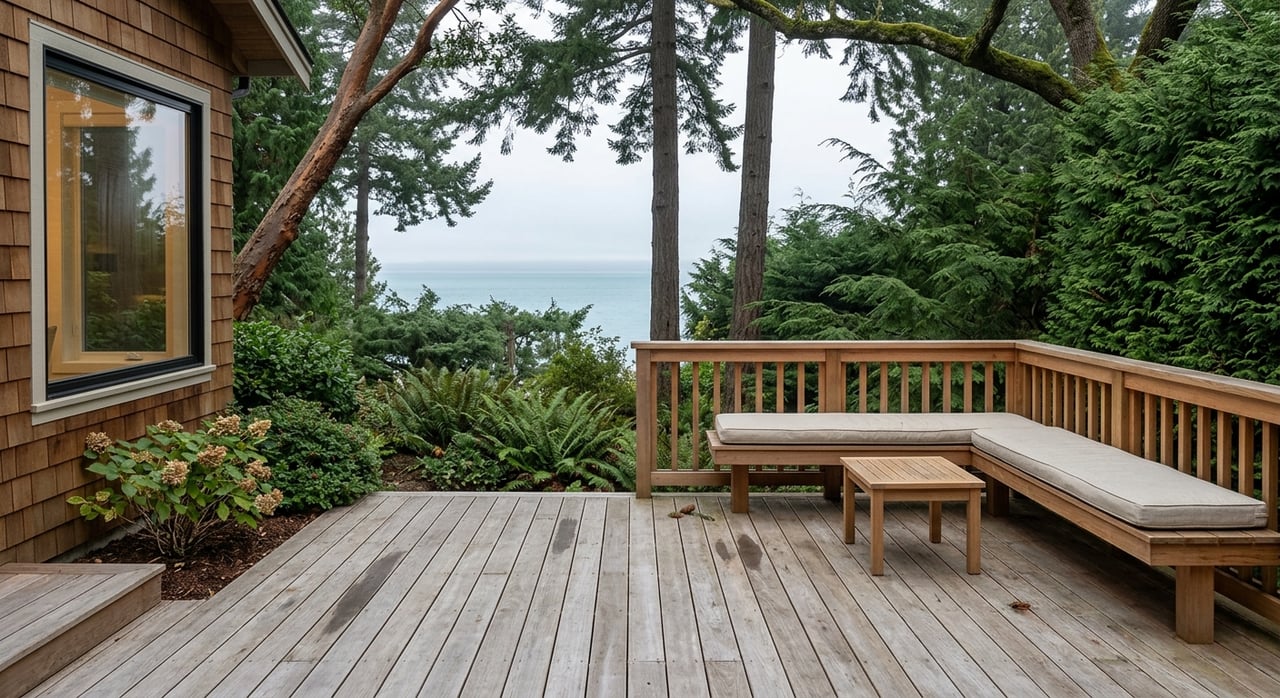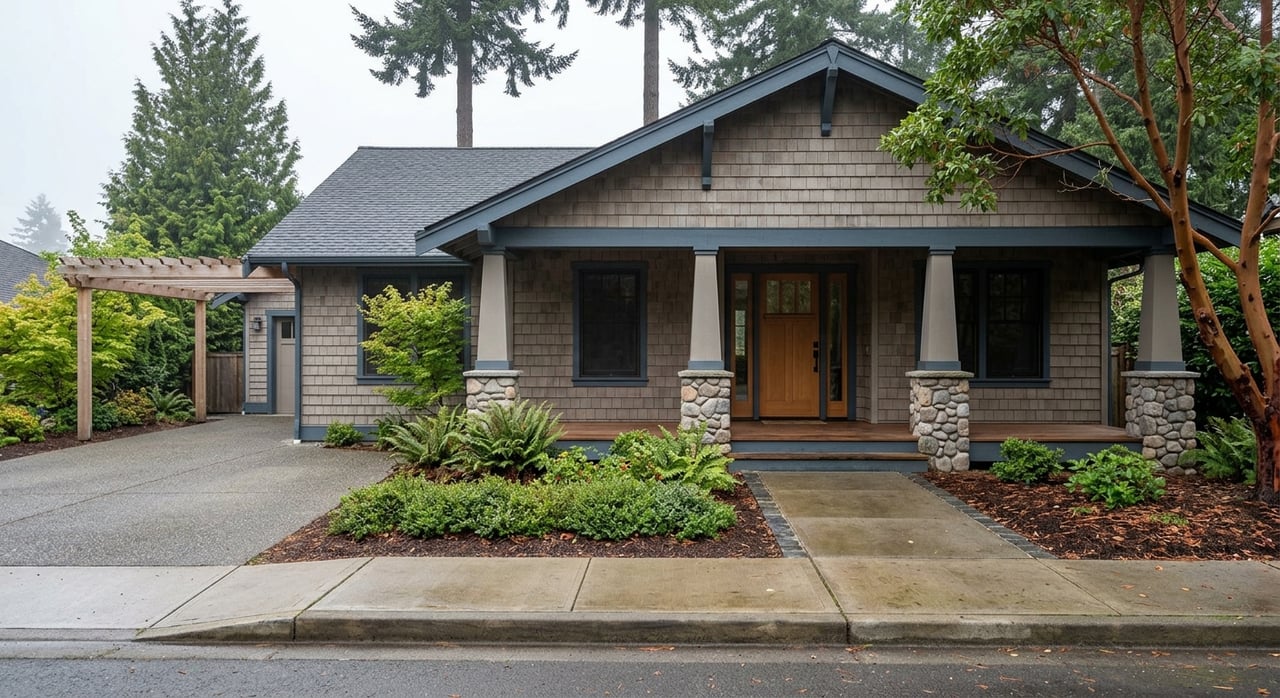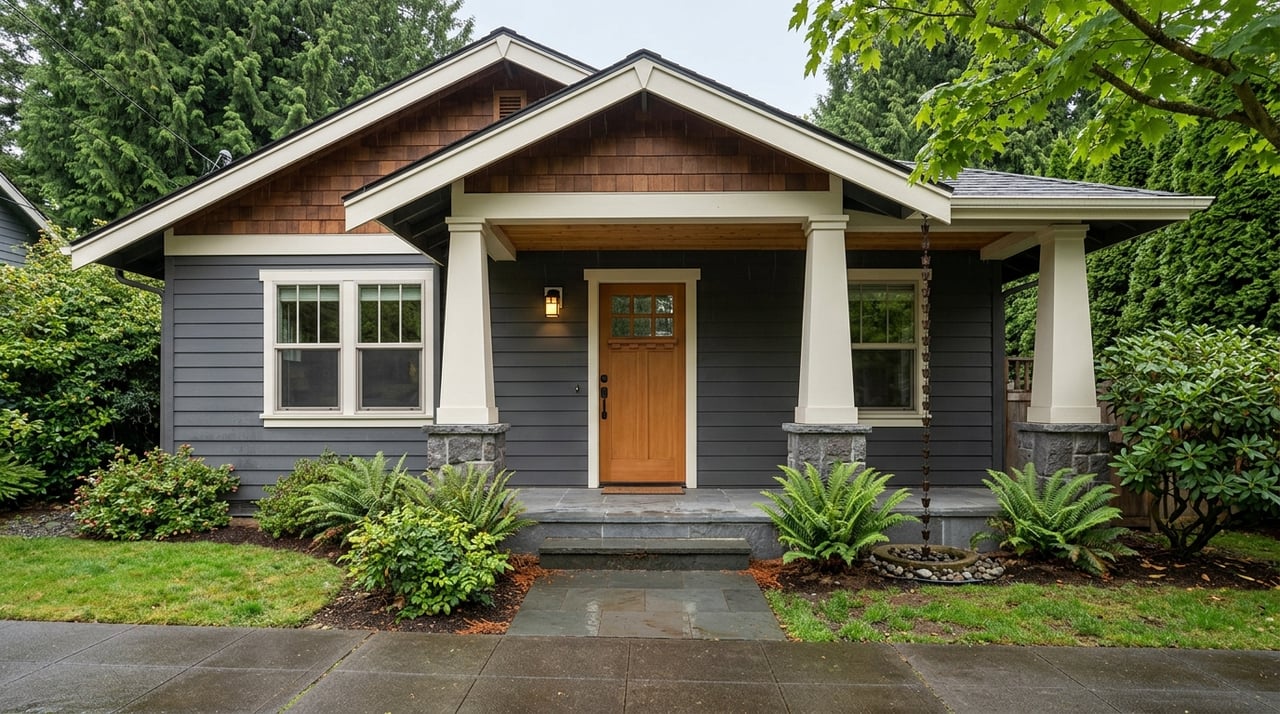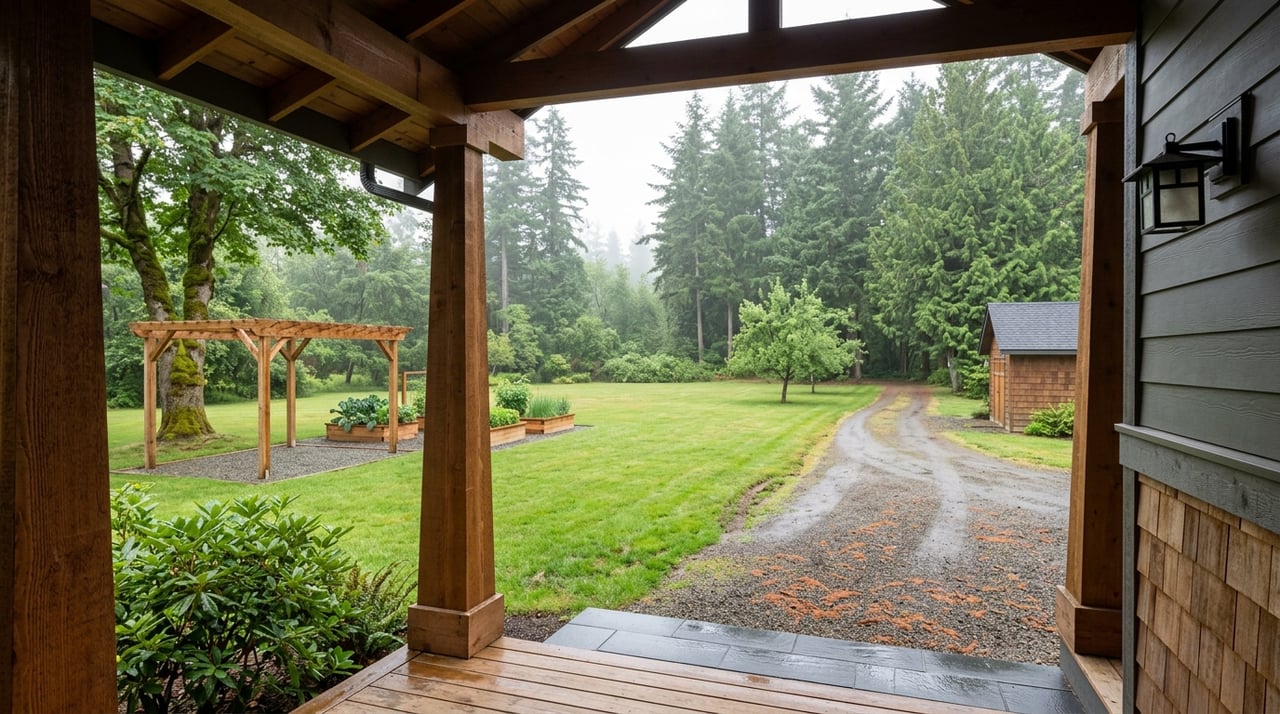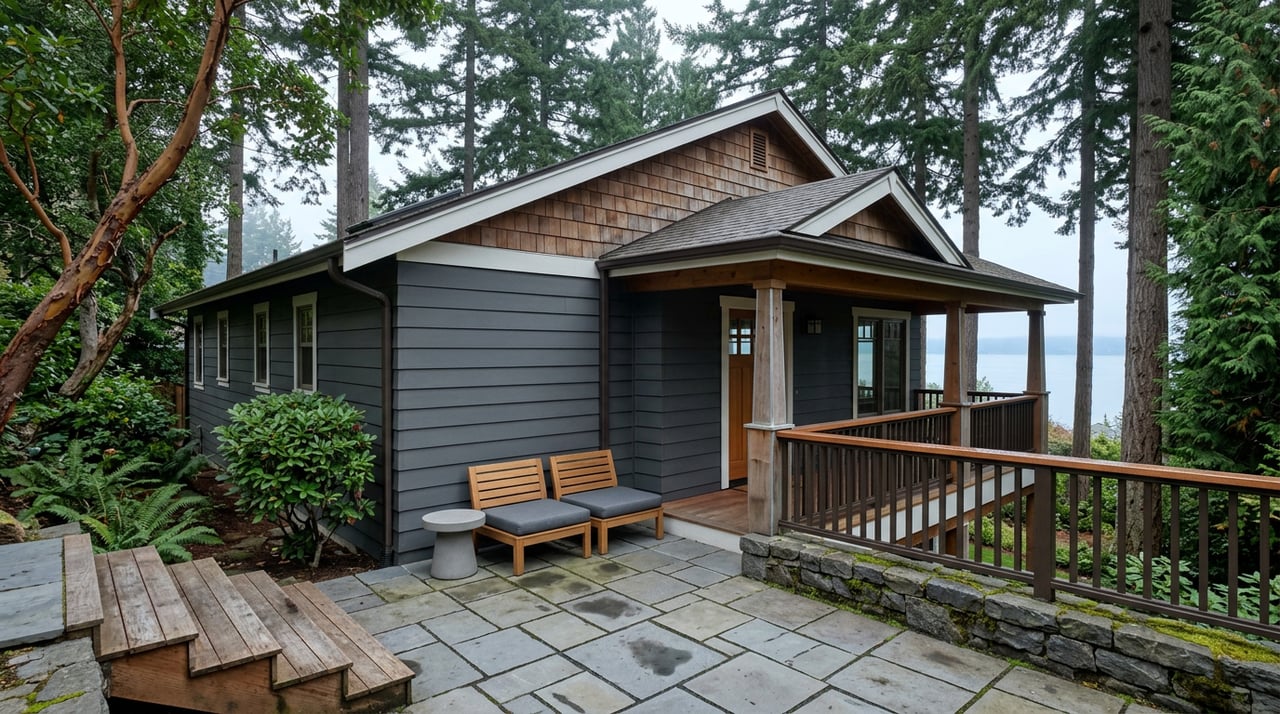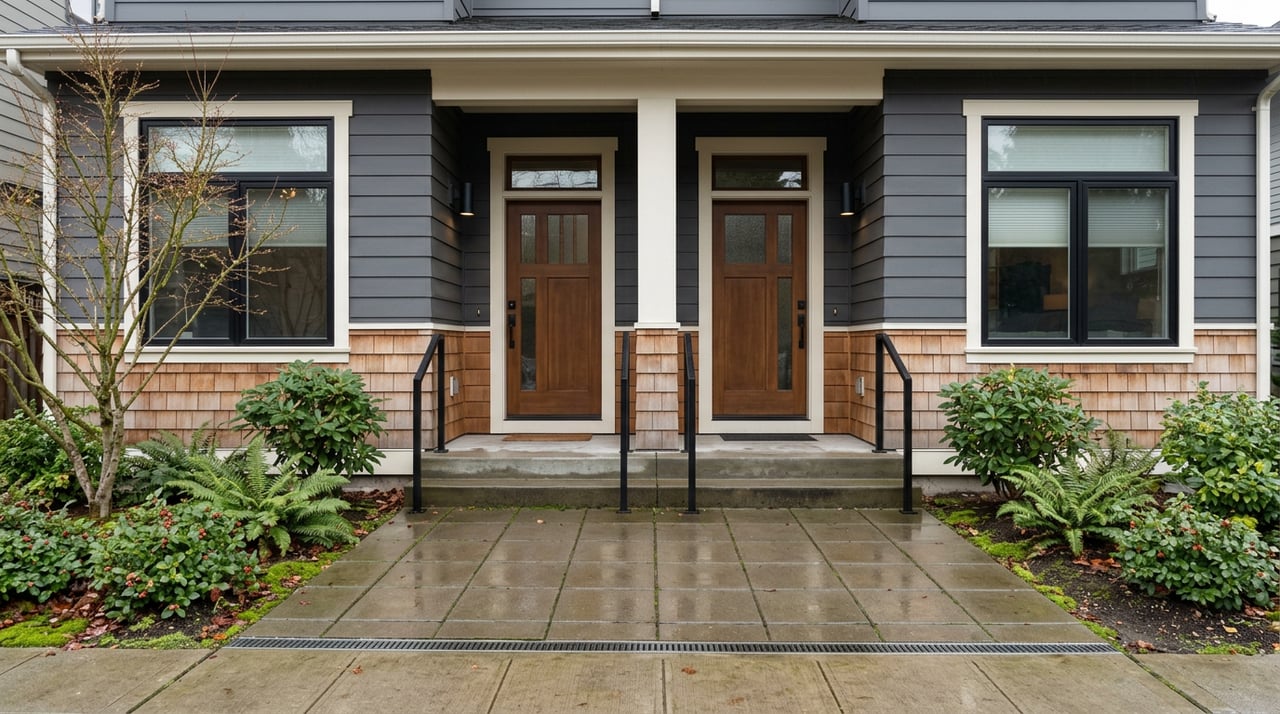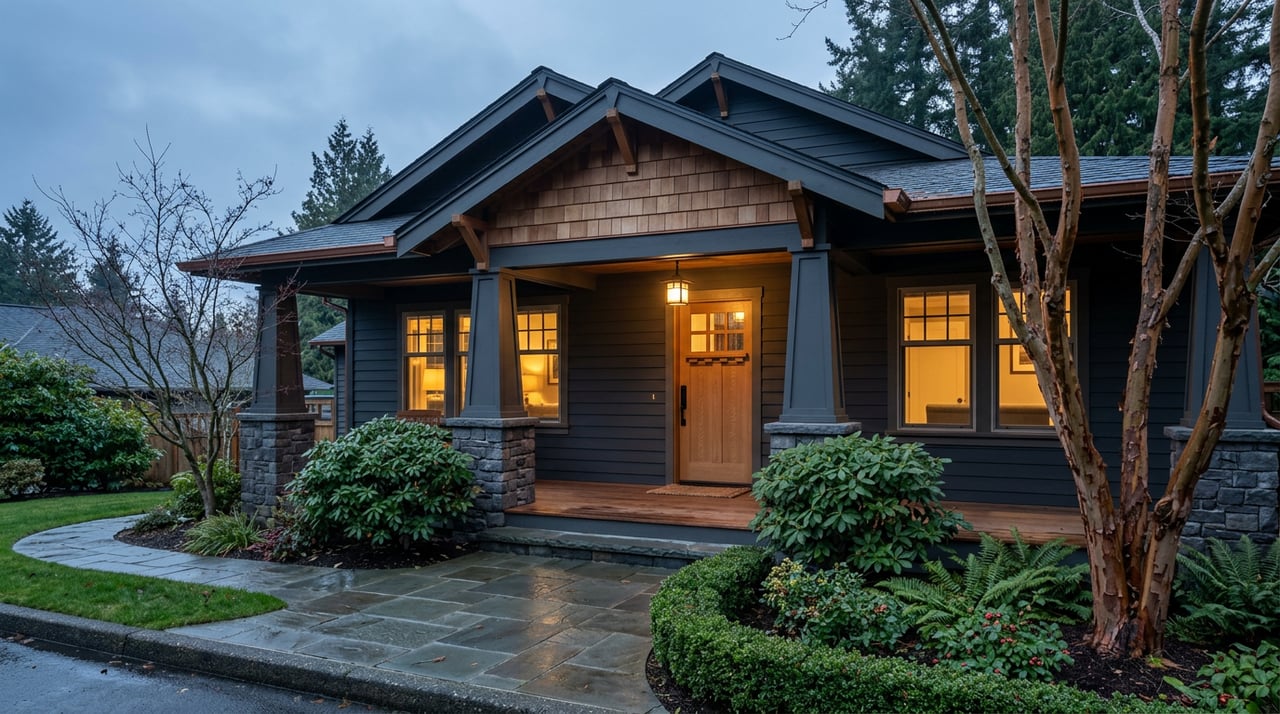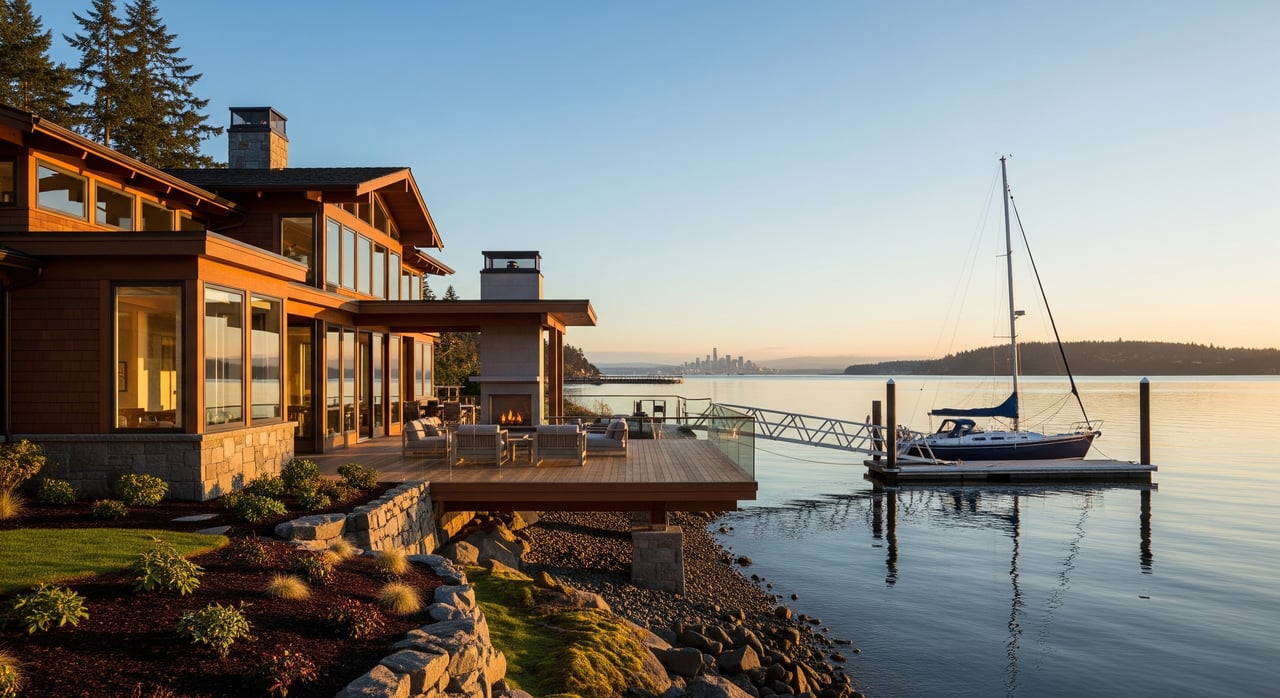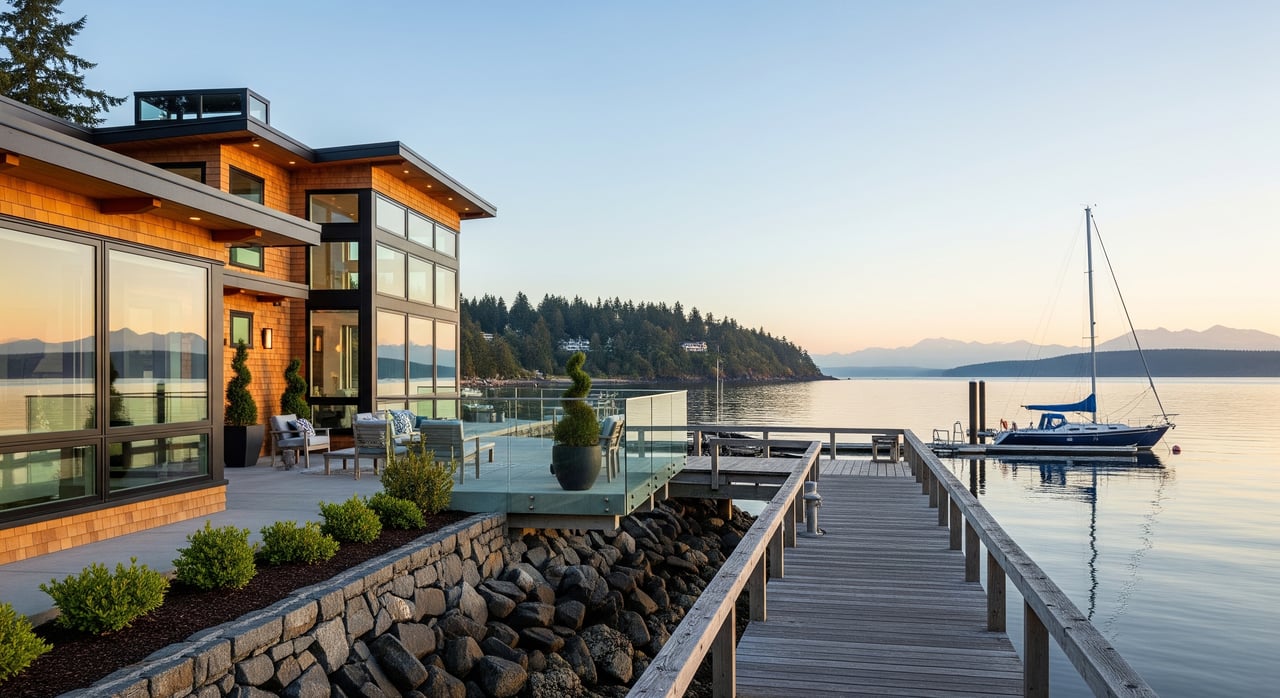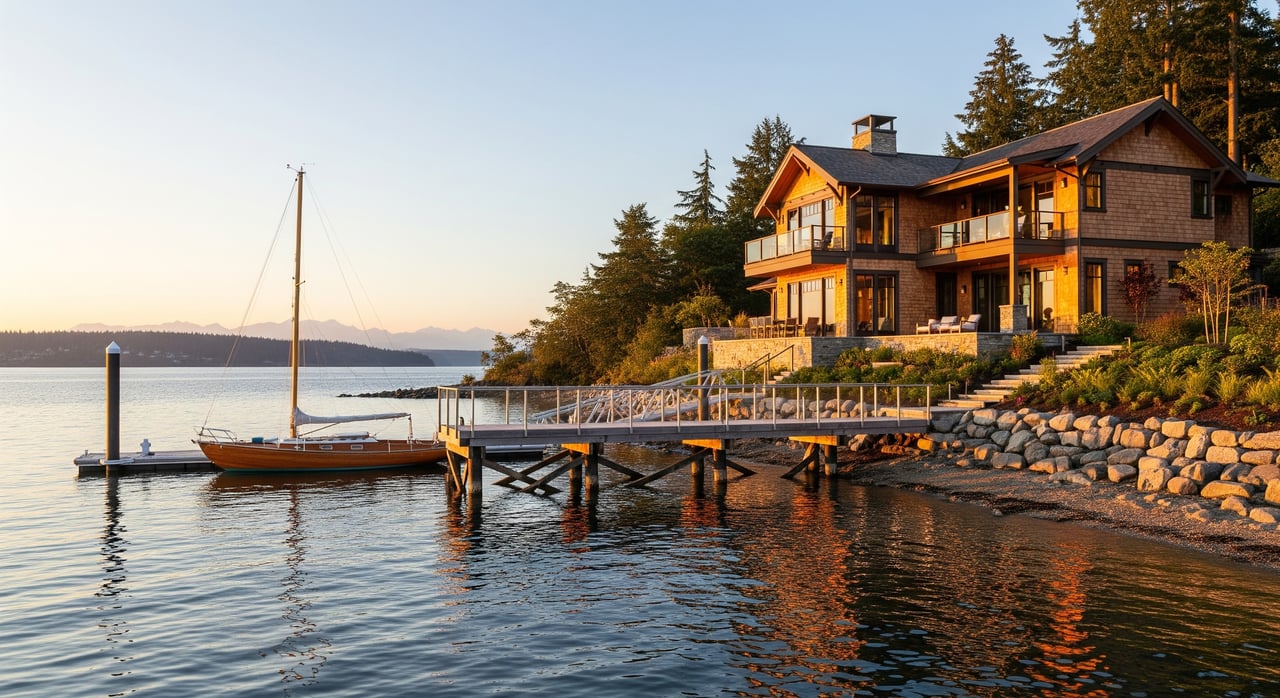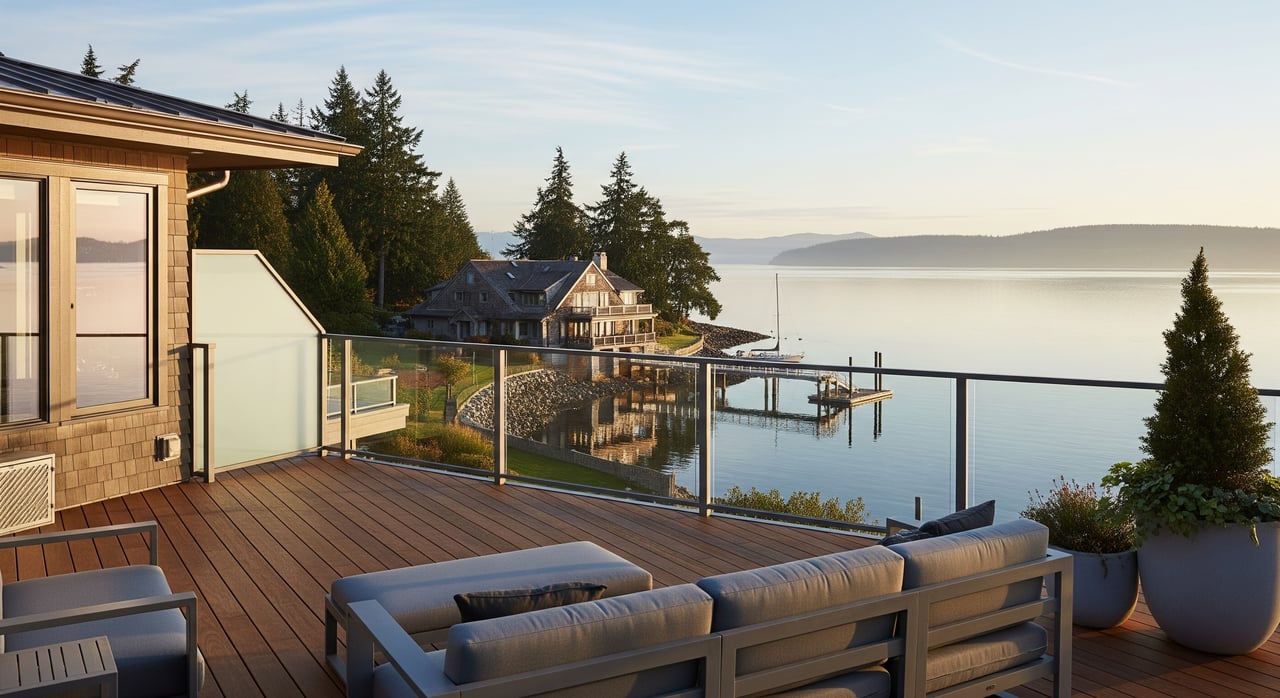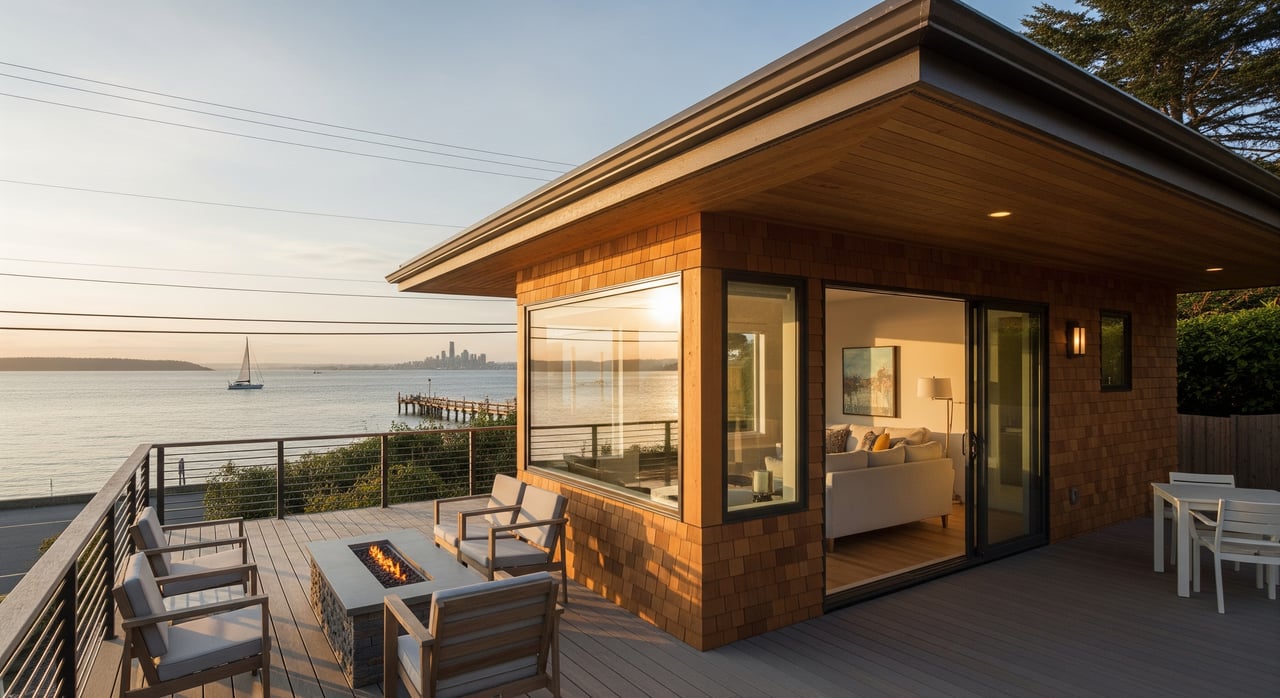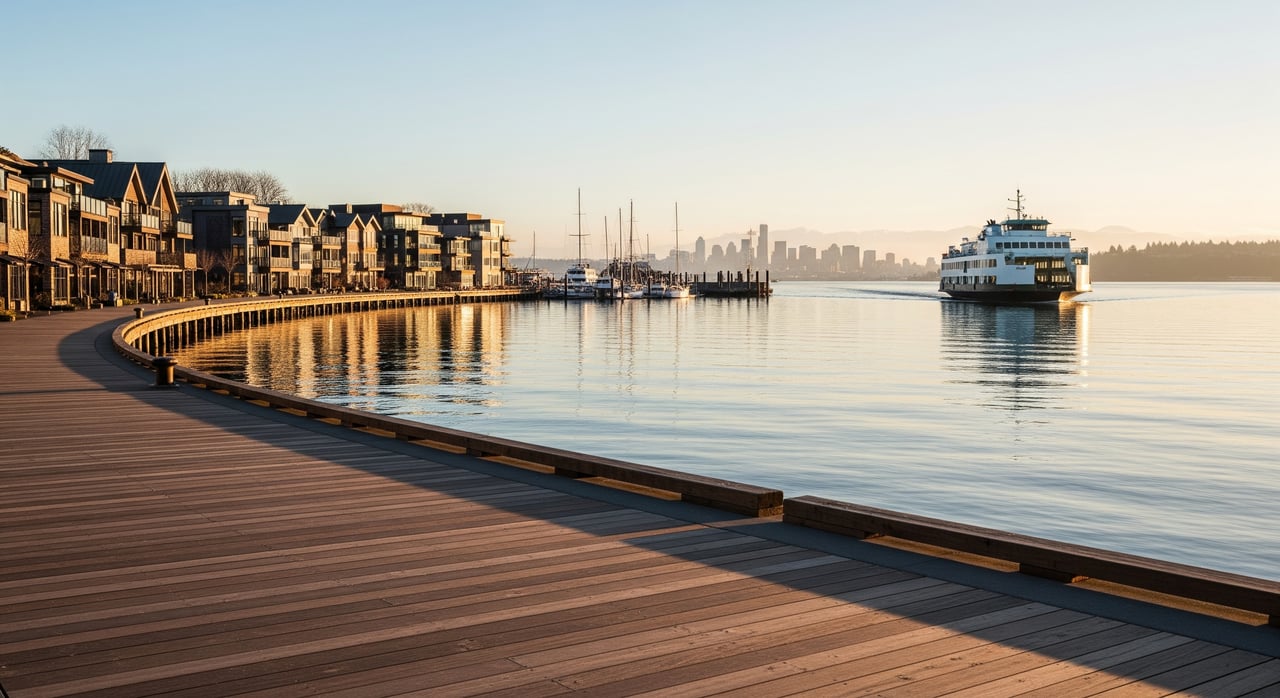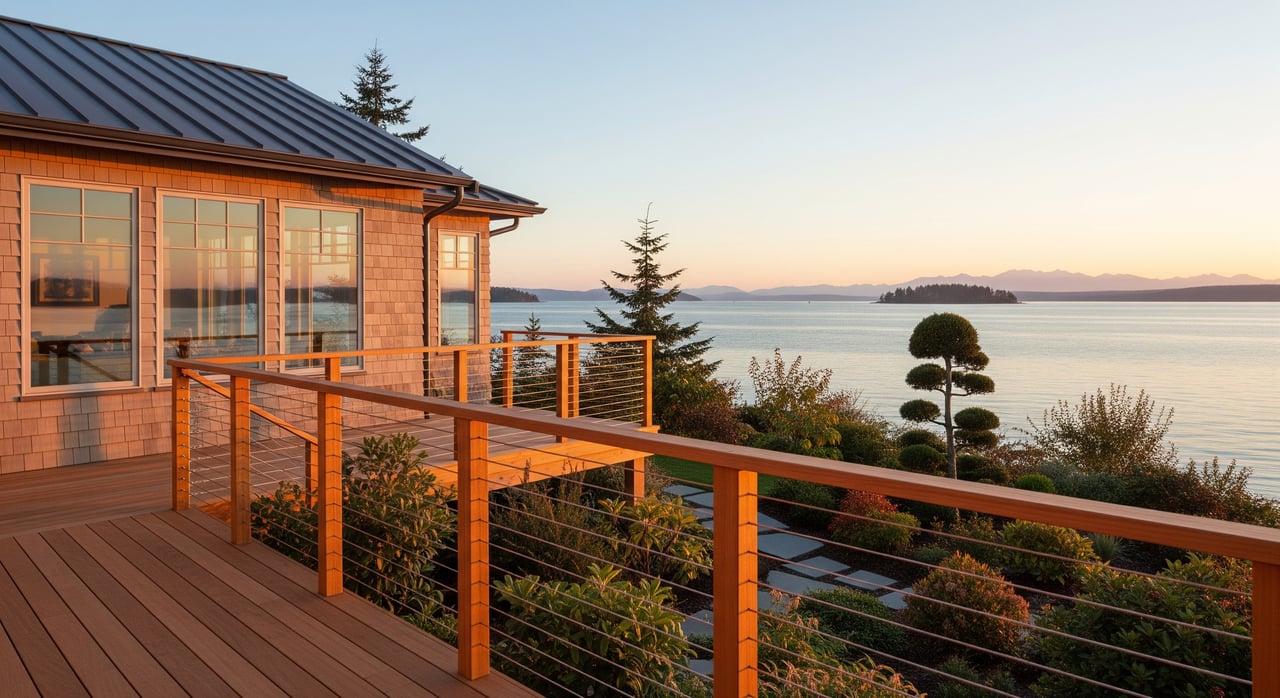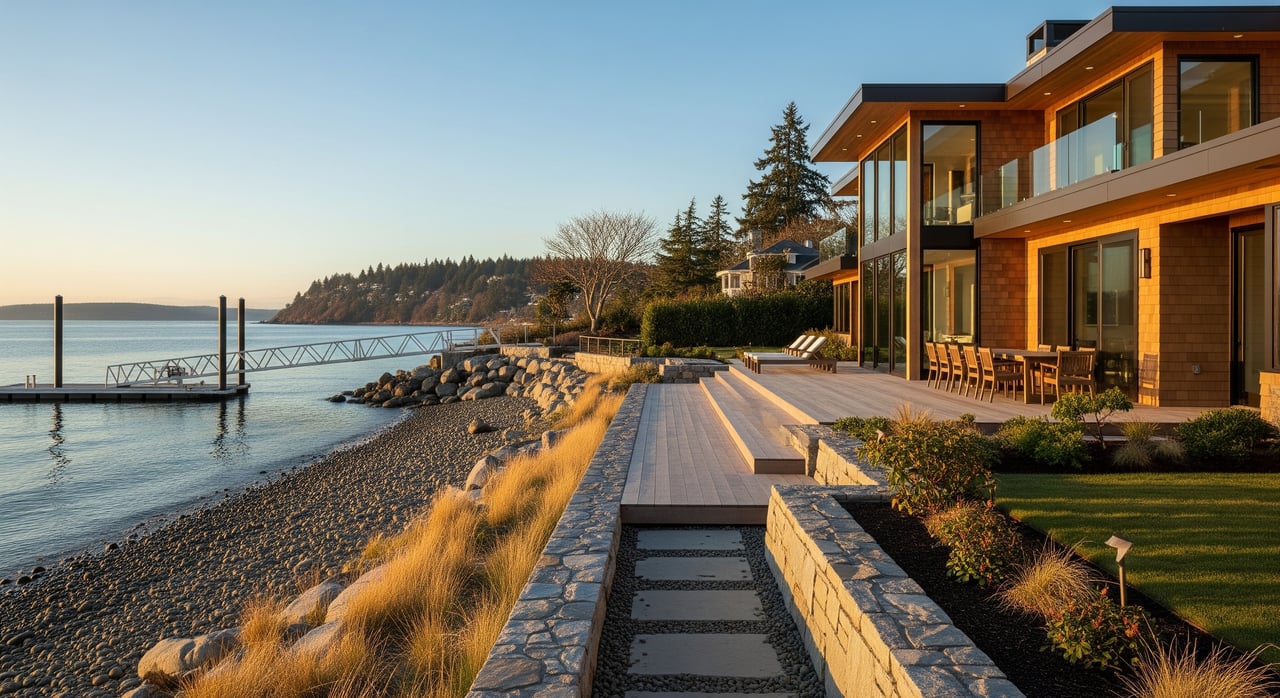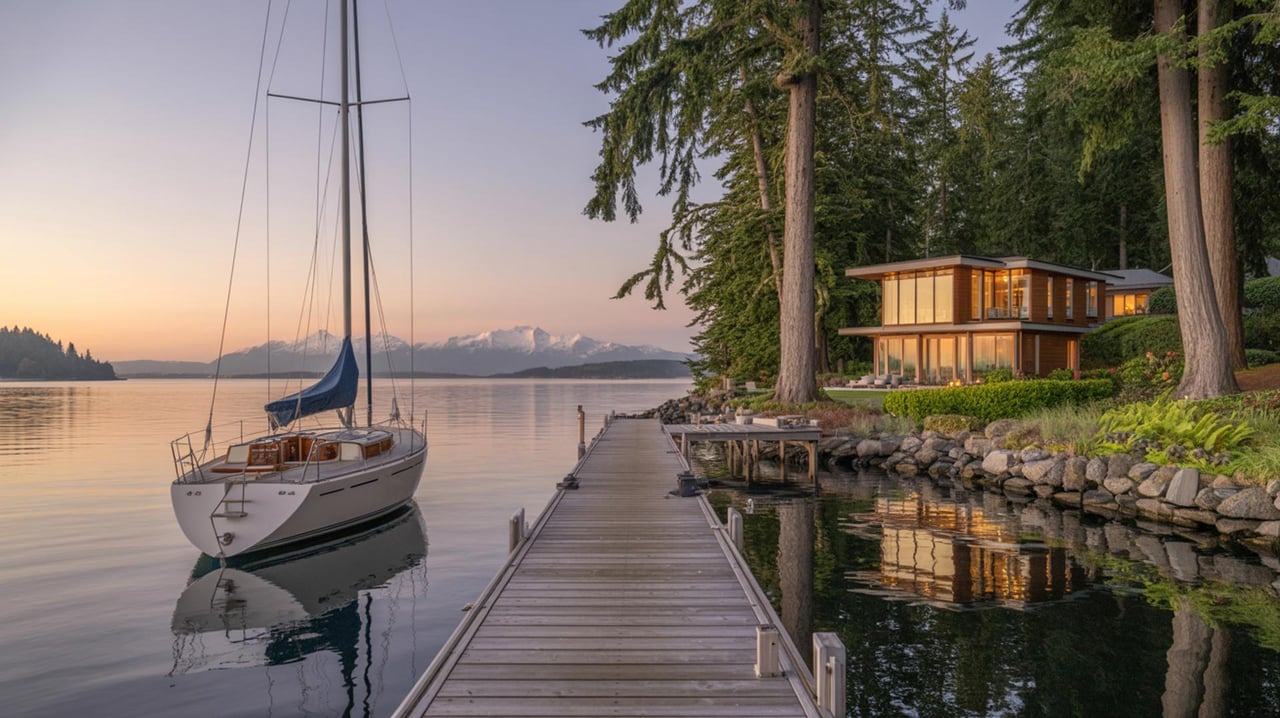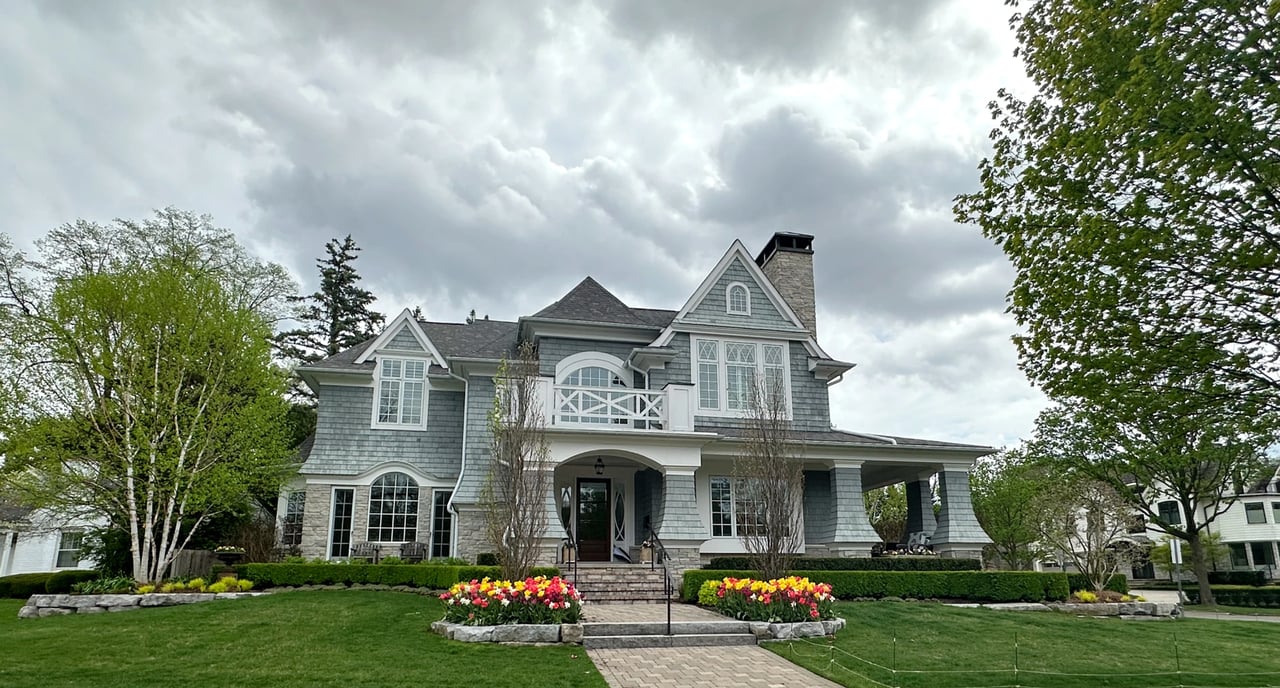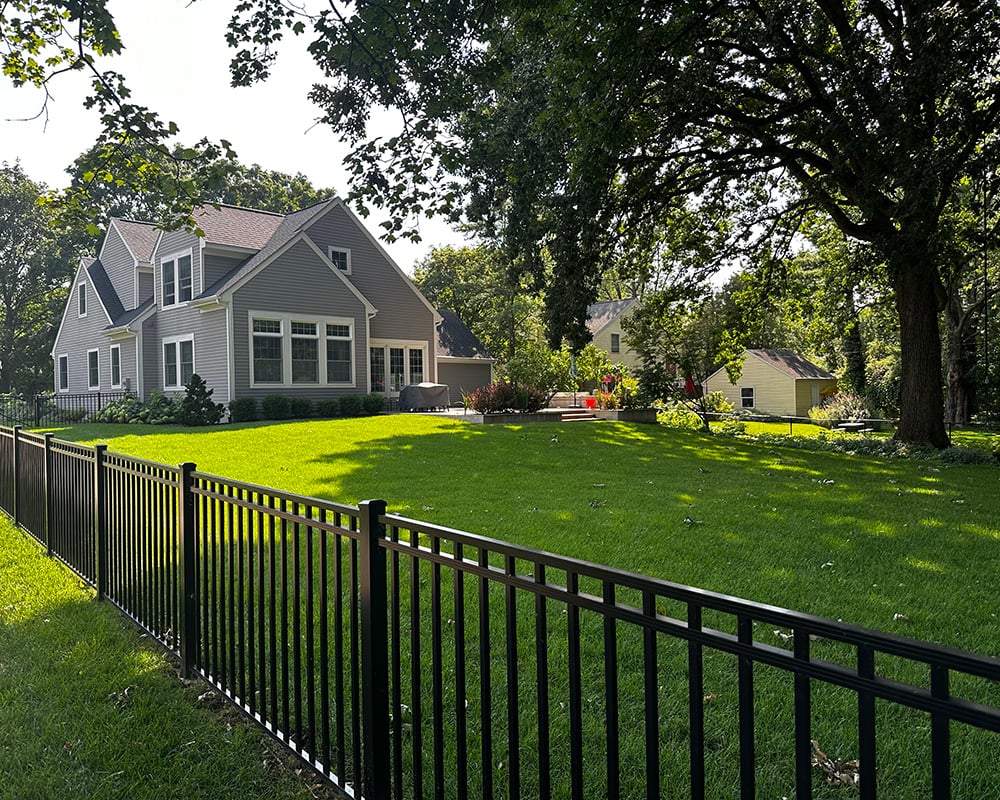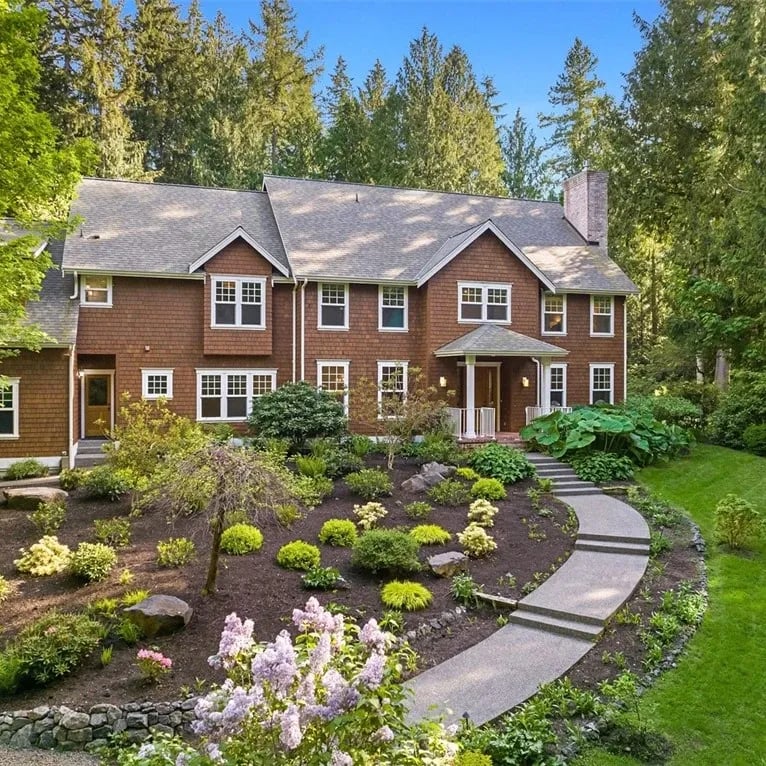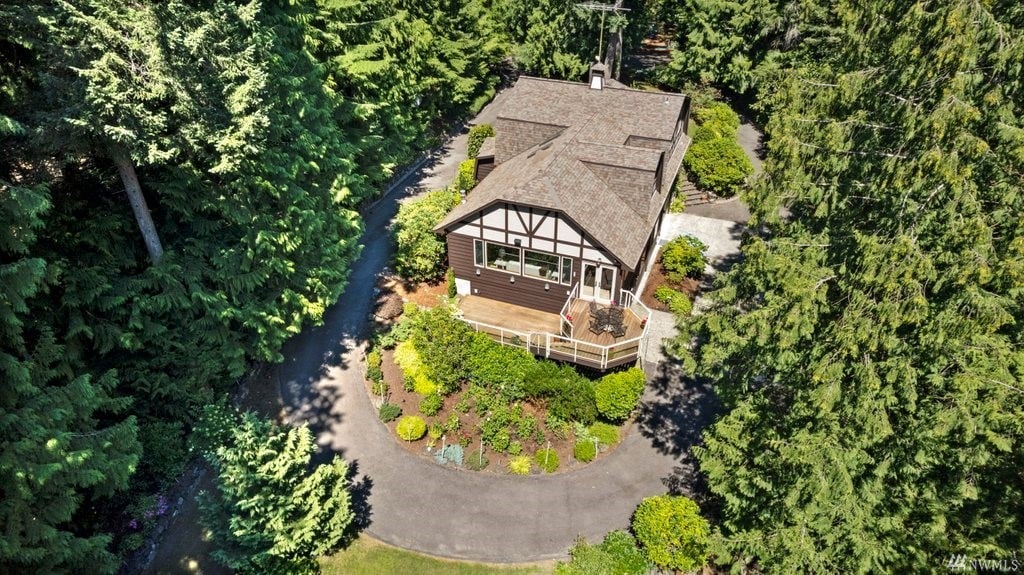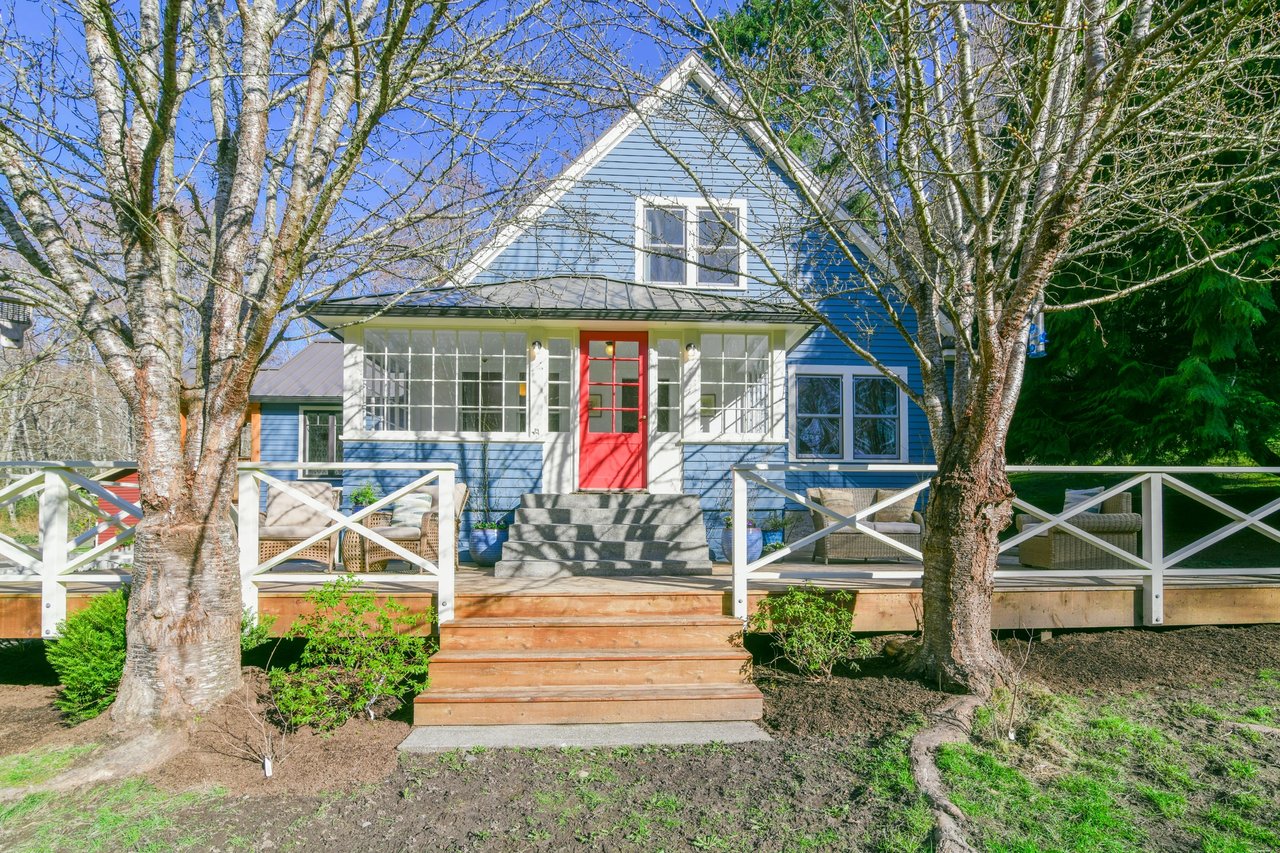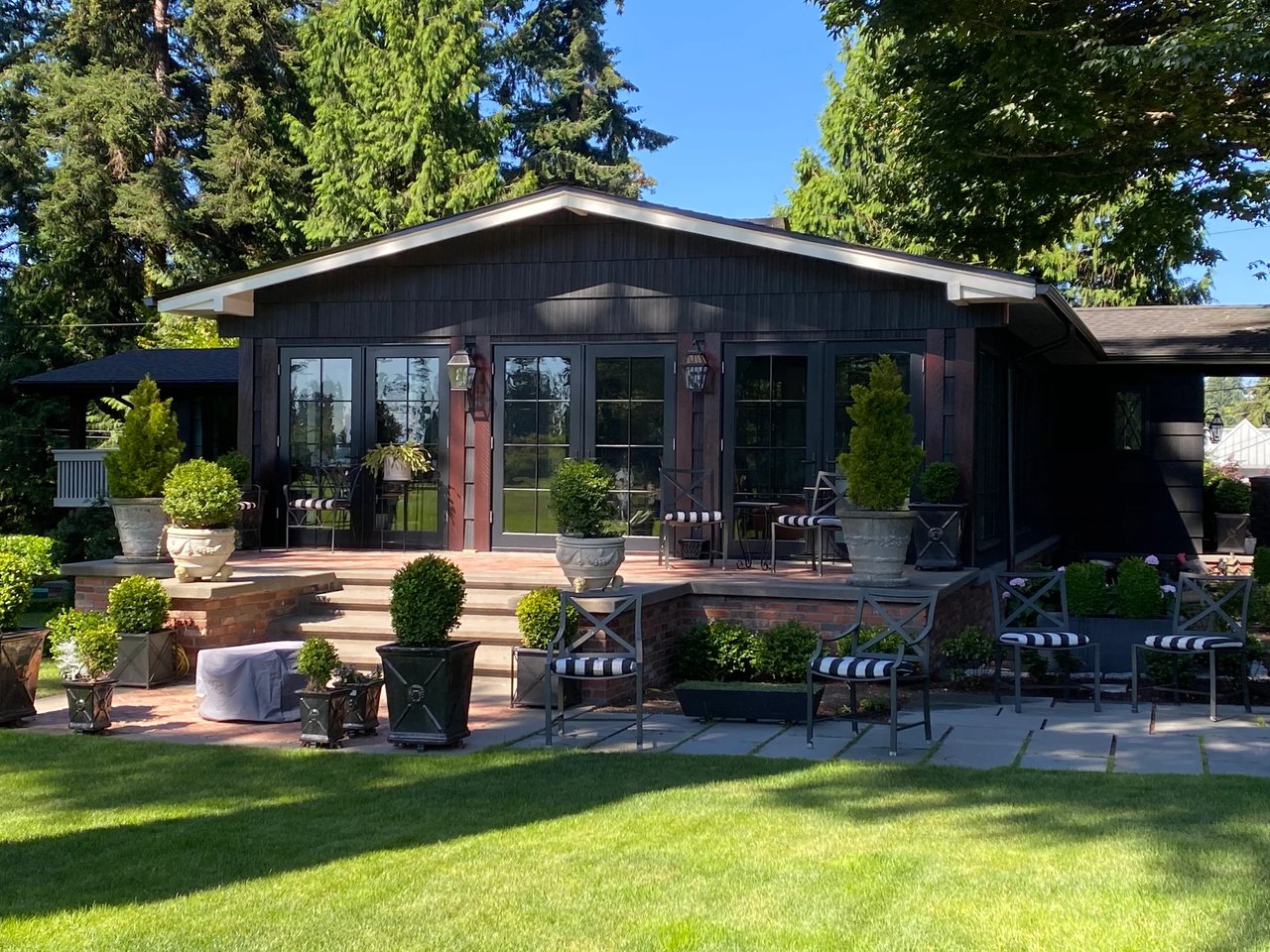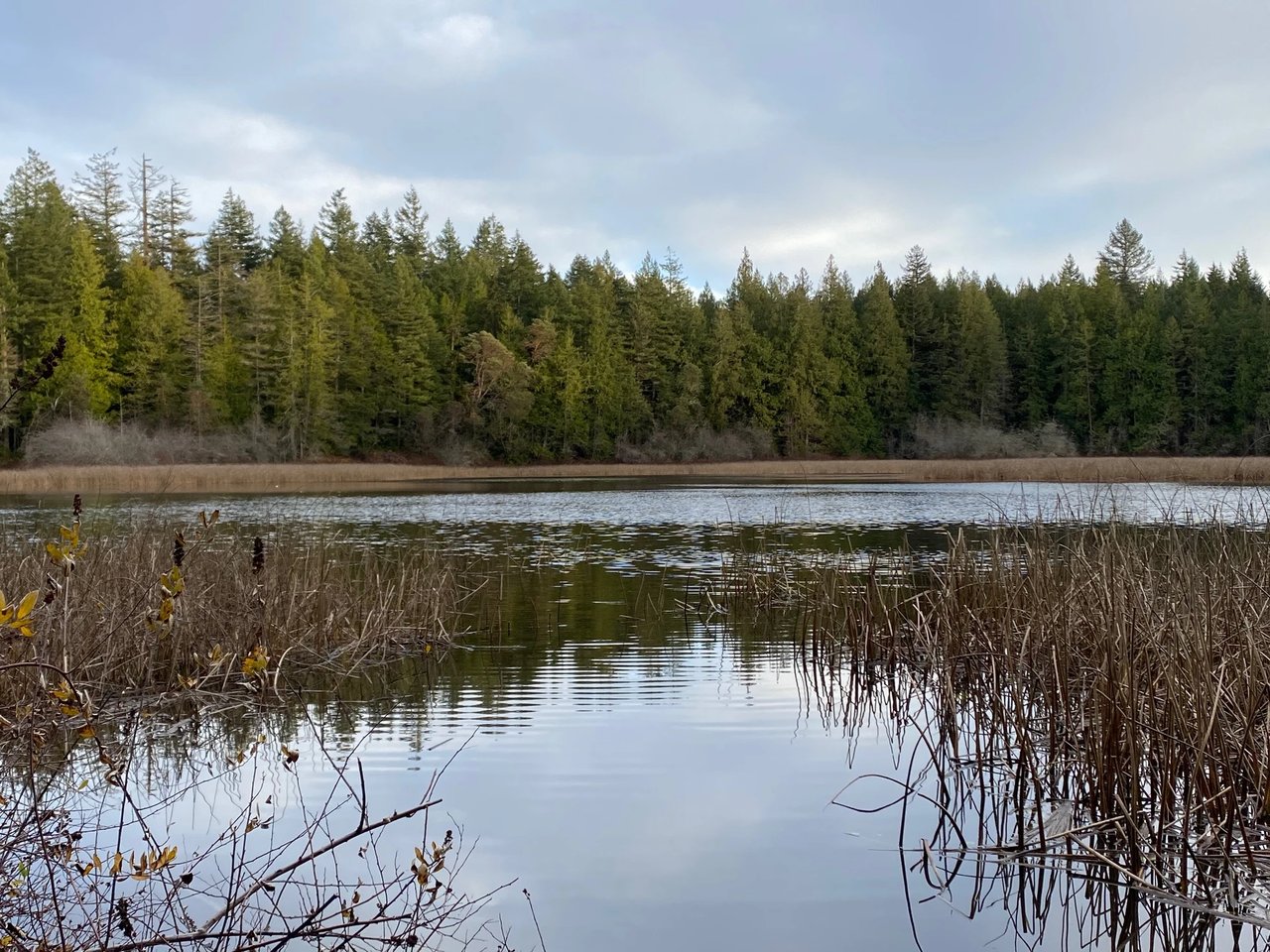
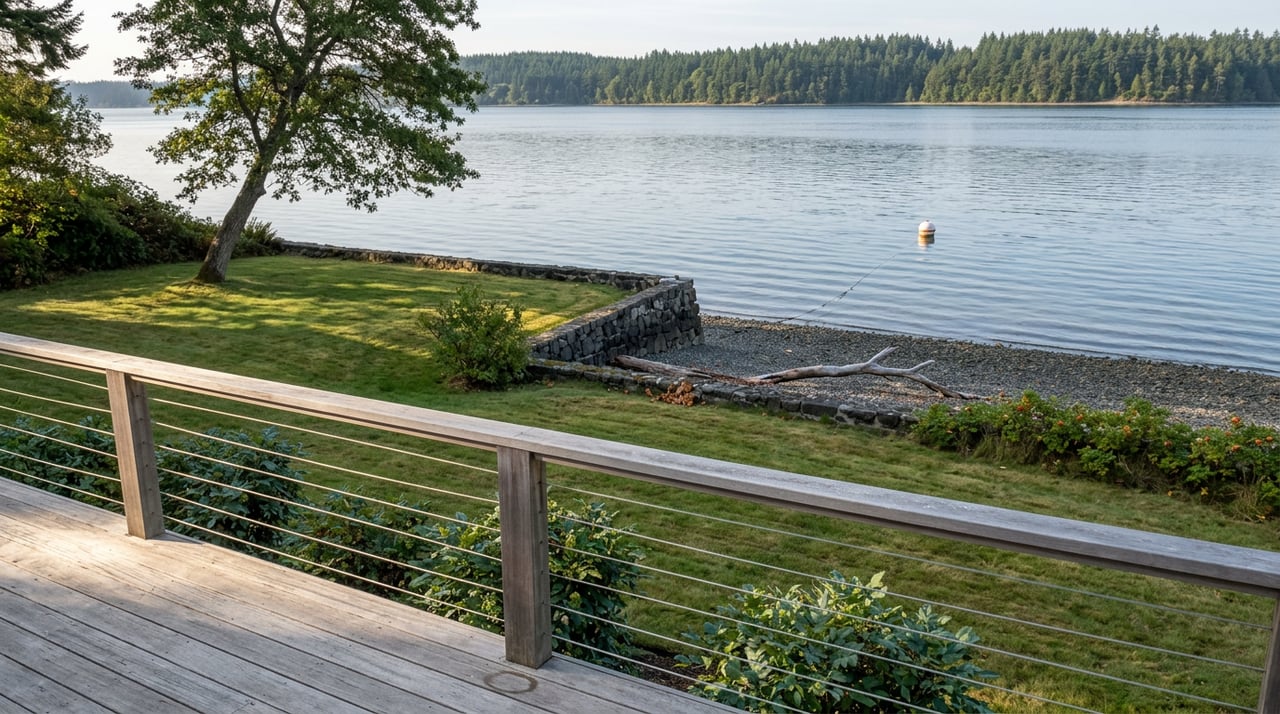
Buyers touring Crystal Springs for the first time usually ask the same question at some point during the walk down to the beach. Where's the dock. It's a fair question. Most people picture waterfront ownership as a private structure you can walk out on, tie a boat to, and call your own. In Crystal Springs, that picture is almost always wrong.
Ask around the neighborhood or scroll through listing photos of homes along Crystal Springs Drive and Point White Drive and you'll notice the same thing over and over. Beach access, yes. Mooring buoys, often. Private docks, almost never. The one substantial pier in the area, the old Point White Pier, is public, not attached to any single home. It's a former Mosquito Fleet ferry landing that now draws swimmers, fishermen, and scuba divers rather than a private boat.
That pattern isn't an accident of taste. It's the predictable output of how Washington state and Bainbridge Island regulate new construction over water, and understanding it changes how you should read a listing, plan a closing timeline, and think about what "waterfront" actually gets you here.
The Neighborhood Pattern Nobody Markets
Crystal Springs sits on the southwest shore of Bainbridge Island, a stretch known for western exposure, long sunsets over the Olympic Mountains, and a mix of cottage-style homes that trace back to the Munro and Hansen families who once held much of the shoreline. It's a low-bank waterfront neighborhood, which usually reads to buyers as prime dock territory. Instead, moorage here runs almost entirely on buoys.
Listing agents describe this as a feature of the area's character, and in a sense it is. But it's also a description of what the permitting system allows. New overwater structures, meaning piers, docks, and floats, sit at the bottom of a regulatory hierarchy that treats buoys as the default and everything else as something you have to justify.
Why the Code Prefers a Buoy
Kitsap County's shoreline development standards, which still govern unincorporated shoreline just across Rich Passage from Crystal Springs, state the preference in plain language: buoys are to be preferred over piers, docks, or floats, and an applicant has to demonstrate that a buoy isn't a feasible option before proposing anything more permanent. Single-use mooring structures other than buoys are prohibited unless the applicant can show a joint-use facility genuinely won't work. Bainbridge Island annexed the entire island and took over shoreline management from Kitsap County back in 1991, formally adopting its own Shoreline Master Program in 1996, but that program was built under the same state Shoreline Management Act framework, and it shows the same caution toward new construction over water.
If anything, Bainbridge has spent more than two decades demonstrating how far it will go to slow new dock construction under its own program. The most visible fight played out in Blakely Harbor, on the other side of the island, where the city imposed a series of moratoriums on new piers and docks starting in 2001, citing the risk to critical shoreline habitat and juvenile salmon. Property owners sued, and years of litigation eventually reached the Washington Supreme Court and then the Ninth Circuit. The city's moratorium method was found unconstitutional, but the permanent ban on new single-use private docks in Blakely Harbor that followed it was upheld and remains in effect today. It's a different harbor than Crystal Springs, but the case tells you everything about how the city treats new overwater construction anywhere on its shoreline. Slowly, skeptically, and with the presumption against it.
Kitsap County's code spells out just how early that scrutiny starts: before an applicant can even file paperwork for a new pier or dock, they're required to hold a consultation meeting with state and federal agencies and with tribal governments whose treaty fishing rights touch that stretch of shoreline. Bainbridge's own permitting process runs on the same state framework and carries the same expectation of early agency and tribal coordination. That step alone can add months before a formal application is even submitted.
The Paperwork Behind "Buoy Rights"
If a listing mentions moorage, buoy rights, or a mooring buoy included, it's worth understanding what actually stands behind that phrase before you assume it transfers cleanly with the sale. A legal, usable mooring buoy on Bainbridge involves more than dropping an anchor.
- Washington Department of Natural Resources issues the underlying authorization for any buoy on state-owned aquatic land. A homeowner whose property abuts state tidelands can use a buoy for free, but only after registering it with DNR and meeting a specific set of conditions, including that the buoy sits as near to shore as practical and doesn't obstruct any previously authorized buoy nearby.
- A Hydraulic Project Approval from the Washington Department of Fish and Wildlife is required for the physical installation, since anchor systems can affect the lake or sea bed.
- A Joint Aquatic Resources Permit Application, known as JARPA, is the single form used to apply to DNR, WDFW, and the U.S. Army Corps of Engineers at once, rather than filing separately with each.
- A license, once granted, runs on a five-year term and has to be renewed. It is not indefinite, and it is not automatically transferable just because the house sold.
- DNR itself has acknowledged it's short on staff and funding to track unauthorized buoys, which is part of why the agency is proposing changes to the mooring buoy statute for the 2027 legislative session, including a registration fee and clearer enforcement authority.
None of this is disqualifying. Plenty of Bainbridge homeowners moor boats without incident year after year. But a buyer who assumes a buoy is a simple, permanent fixture that came with the house the way a garage does is skipping a step that matters.
What This Means When You're Under Contract
During due diligence on a Crystal Springs waterfront property, the practical question isn't "does it have moorage." It's "is the moorage properly registered, and when does the license expire." A seller who has owned the home for fifteen years may be operating on an authorization that's due for renewal shortly after closing, or one that was never formally registered with DNR at all, which happens more often than most buyers expect given how quietly enforcement has historically run.
If your plan involves adding a dock rather than living with a buoy, budget real time for it, not because the answer is automatically no, but because the process is genuinely slower here than in most waterfront markets. One nearby Point White lot came to market with a completed shoreline variance permit already in hand, essentially pre-approved plans for building along the low-bank shoreline. That kind of head start is valuable precisely because it's rare. Most buyers who want something beyond a buoy are starting the consultation and permitting process from zero, and that process was built, deliberately, to be slow.
A Market Getting Tighter, Not Looser
This matters more right now than it might have five years ago. Island-wide, waterfront sales cooled in 2025, with 52 recorded waterfront home sales compared to 62 the year before, a decline of roughly 16 percent. Fewer transactions generally mean more time to do this kind of homework before writing an offer, but they can also mean more competition for the properties that do come up, and less patience among sellers for buyers who want to renegotiate after finding out the buoy license expires next spring. Doing the moorage research before you're in contract, not after, keeps you from being the party asking for a price adjustment during an already tight inventory cycle.
Quick Questions
Does a mooring buoy count as deeded moorage in my purchase agreement? Not automatically. A buoy authorization sits with DNR and is tied to the license holder and the property's qualifying conditions, not to the deed itself. Confirm the registration status and license expiration as part of your inspection period.
Can I apply for a new private dock if I really want one? You can apply. Kitsap and Bainbridge shoreline rules don't ban it outright in Crystal Springs the way they now do in Blakely Harbor. But you'll need to show a buoy genuinely won't work for your situation, complete the required agency and tribal consultation, and expect a multi-agency review that can take considerably longer than a typical building permit.
Does the absence of private docks affect resale value here? Since it's the norm across nearly the entire neighborhood rather than a flaw in one property, it doesn't function as a red flag the way it might in a market where docks are standard. What matters more to value is whether the existing buoy authorization is current, registered, and easy to transfer.
If you're weighing a Crystal Springs property and want a straight read on what its moorage situation actually looks like before you write an offer, Kimberly and Jack McLaughlin have spent years walking this shoreline with buyers who had the same question at the water's edge. Make time for coffee. Let's schedule a consultation and go through it together.