Bainbridge Island already has one landmark built around the worst six days its Japanese American community ever lived through. It sits on the shore of Eagle Harbor, on the site of the old Eagledale ferry landing, where 227 residents were marched onto a boat in March 1942 and sent away from the only home most of them had ever known.
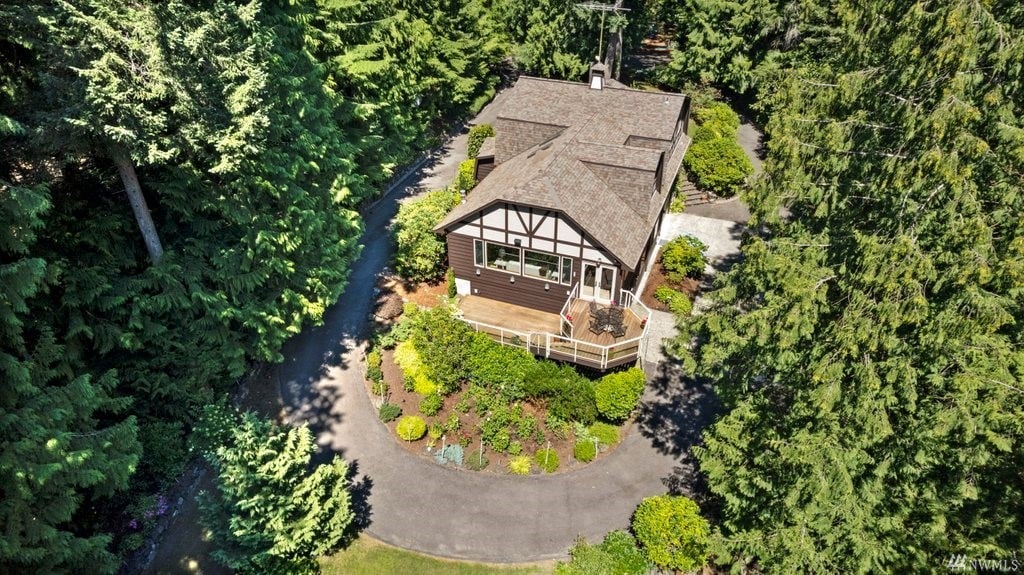
This August, the island got a second piece of ground tied to that same history. It looks nothing like the first one. There is no wall of names, no sculpture, no dedication ceremony planned yet. It is 7.3 acres of woodland on Koura Road, purchased by the Bainbridge Island Parks & Trails Foundation and handed over to the Bainbridge Island Metro Park & Recreation District as passive open space with recreational trails to come.
The seller was the Hayashida family, which had stewarded the parcel for generations before deciding, this year, to let it go.
That word, stewarded, is doing more work than it looks like it's doing.
Six Days, 227 People, One Ferry Landing
To understand why a family quietly selling forested acreage on Koura Road is worth a second look, it helps to know what that surname has already meant on this island.
On February 19, 1942, President Franklin Roosevelt signed Executive Order 9066, authorizing the removal of civilians of Japanese ancestry from the West Coast. Bainbridge Island was named first. Civilian Exclusion Order No. 1 gave the island's Japanese and Japanese American residents six days to arrange their affairs before soldiers loaded them onto trucks bound for the ferry. Among the 227 people forced from their homes in that first group, according to the Seattle Times' account of the era, was the Hayashida family.
One of them, 31-year-old Fumiko Hayashida, was photographed at the ferry landing holding her sleeping 13-month-old daughter. Neither of them knew who took the picture. For decades neither did anyone else, and the image circulated nationally as the anonymous "Mystery Lady," an emblem of what happened to roughly 110,000 Japanese Americans during the war. Researchers working with a Smithsonian exhibit finally traced her identity in the 1990s. In 2006 she testified before a congressional subcommittee in Washington, D.C., pushing for a permanent memorial back home. She got it in 2011, when the Bainbridge Island Japanese American Exclusion Memorial opened at the old ferry site, its cedar Story Wall carrying the names of all 276 Japanese and Japanese American islanders from that period. A sculptural addition marking the departure itself was dedicated there in September 2022. Fumiko Hayashida died in 2014 at age 103, having lived to see her own image become the thing the island uses to remember what was done to her family and her neighbors.
That is the history most people associate with the Hayashida name on Bainbridge. It is a history of removal.
What the Memorial Marks, and What Koura Road Marks Instead
The Exclusion Memorial exists because something was taken. The new park on Koura Road exists because something wasn't, or at least not permanently.
Being forced off the island in 1942 did not mean every family lost its land for good. What happened to that land varied wildly, and the variation is the part most retellings skip. According to the historical record kept by the Bainbridge Island Japanese American Community organization, more than half of the families who were incarcerated did return after the war and rebuilt their lives here. Others did not have that option. The Kinos lost their strawberry farm outright when property taxes went unpaid during their incarceration and there was nothing left to come back to. The Sakumas resettled near Burlington instead, deciding that land was more farmable than trying to reclaim what they'd left. The Kitayamas built a new greenhouse business in California rather than return.
Holding onto a specific piece of Bainbridge Island soil across three generations, through incarceration, through a wartime economy that erased other farms outright, through decades of rising land values that turned other Japanese American farmland into golf courses and subdivisions, was not the default outcome. It was the exception.
A half mile or so from this new parcel, that exception didn't hold. The Koura family, a different Bainbridge farming family whose name the road itself now carries, built a strawberry operation off Koura Road that grew to 180 acres, the largest berry farm the island ever had. It survived the war years with help from neighbors who looked after it during the family's incarceration. It didn't survive competition from California growers. In 1964, the Koura farm was sold and became the Meadowmeer subdivision and golf course that occupies much of that stretch of Koura Road today. The barn still stands, restored, now used for community gatherings and children's programs.
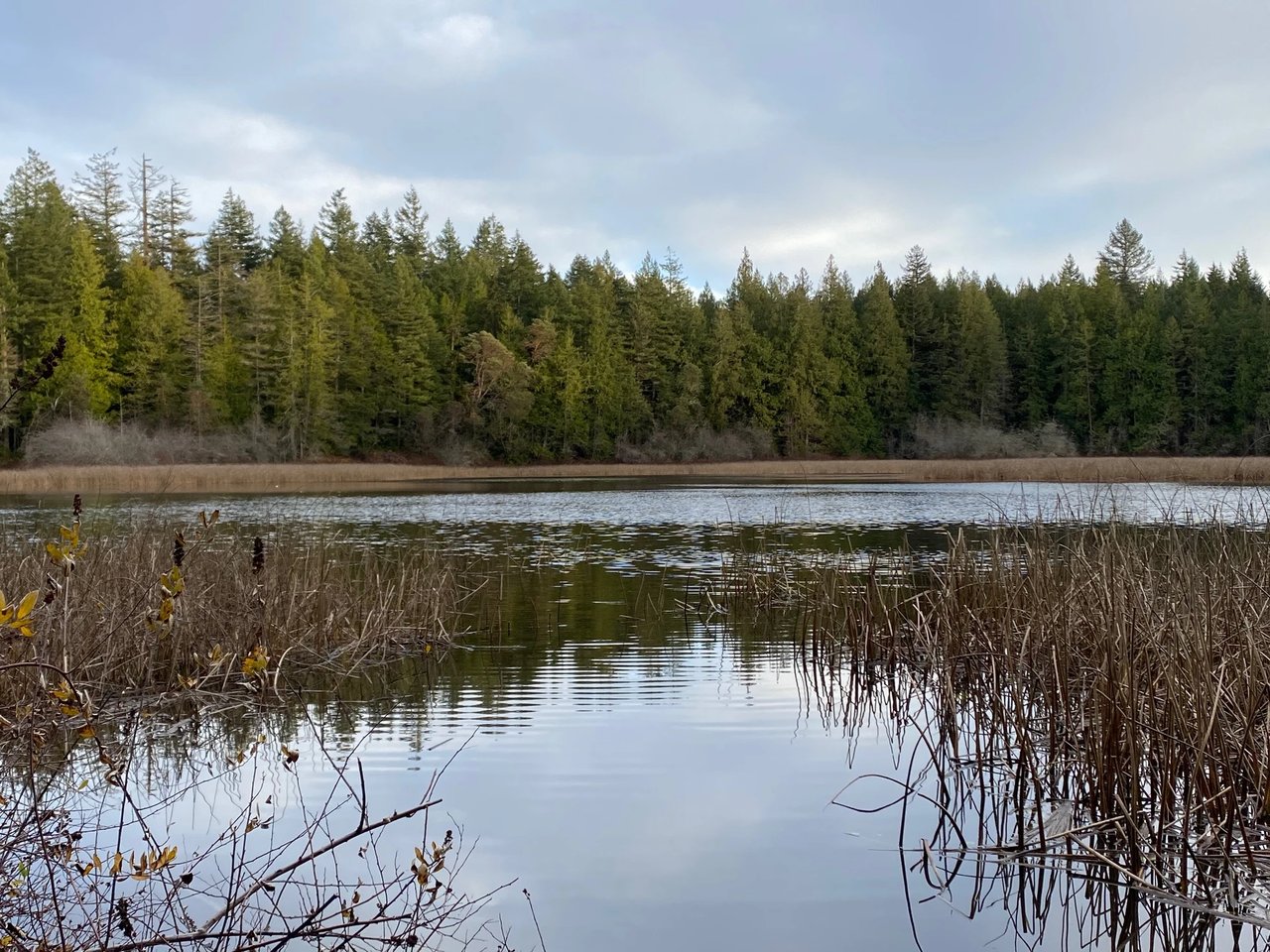
The Hayashida woodland took a different path. It stayed forested. It stayed in family hands. And this year, instead of selling to a developer the way so much of the island's old farmland eventually did, the family sold it to a nonprofit whose entire purpose is keeping land undeveloped, funded by two private donors specifically so the parcel could pass into public trust as open space rather than become another set of home lots.
Its public future is now clear; what visitors can actually do there is another matter.
Where to Actually Find It, and What Isn't Built Yet
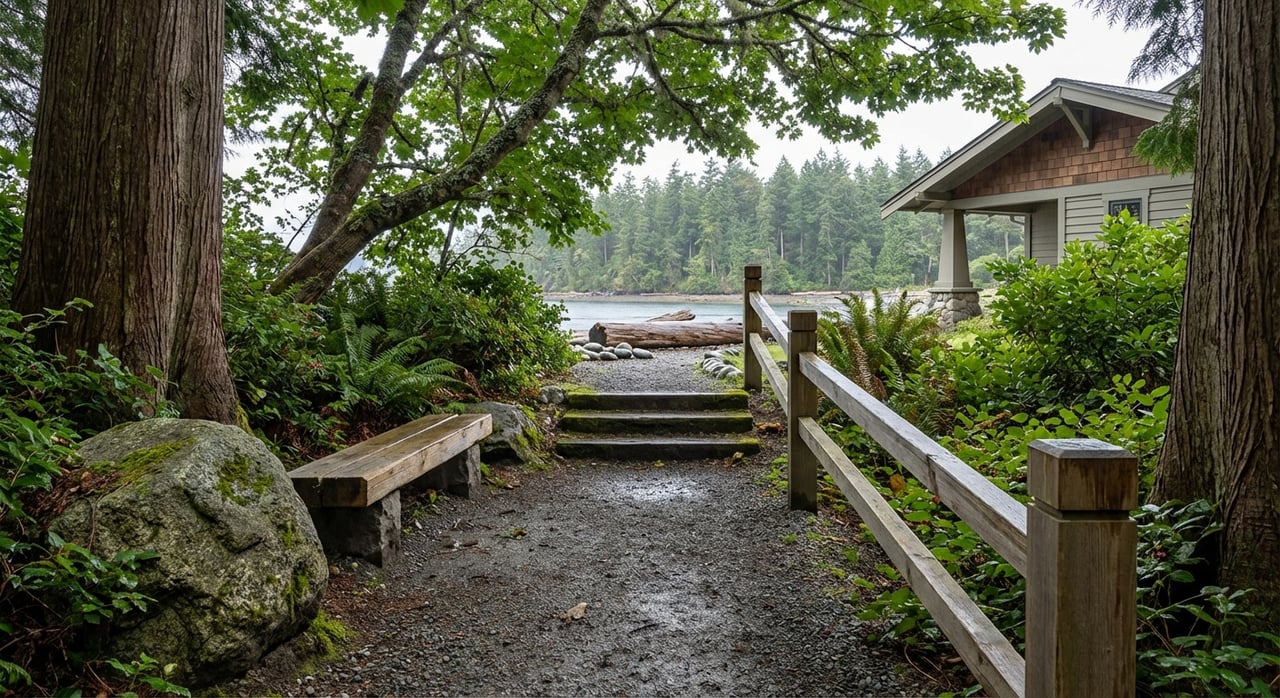
If you're looking for a trailhead sign, you won't find one yet. This is a brand new acquisition, and the Park District's own language describes it as passive open space with recreational trails, which on Bainbridge tends to mean the infrastructure follows the acquisition by months or years, not days.
For a sense of how that timeline usually plays out here, look at Meigs Park, the 97-acre wetland at the southwest corner of Koura Road and State Route 305. The Park District has owned that ground for years. It still limits public access because the bog system there is delicate, and a boardwalk with an interpretive viewing area remains a future plan rather than something you can walk today. The new Hayashida parcel sits in the same general stretch of Koura Road, in the Meadowmeer area, within reach of the Grand Forest trail network to the west. Expect a similar arc: acquisition first, informal use for a while, formal trails and signage later, once the Park District works out access points and parking that don't compromise whatever makes the woodland worth protecting in the first place.
In the meantime, if you want to stand somewhere connected to this same story today, the restored Koura Barn is the closest thing Bainbridge has to a physical stop you can actually visit, a working reminder of what berry farming on this stretch of the island once looked like, even though it belongs to a different family's history than the parcel just transferred.
The Through-Line
Bainbridge tells the story of its Japanese American community mostly through loss, and it should, because the loss was real and the island has done serious work to make sure it isn't forgotten. But loss was never the whole story, and a family's woodland remaining in family hands for decades before being sold to a nonprofit for public open space is a version of that history the island hasn't had a public way to point to before now.
If you're the kind of person who wants this kind of context before you buy a house here, not after, that's more or less what conversations with Kimberly and Jack McLaughlin tend to turn into. Make time for coffee. We'll tell you what the road names actually mean.